


Ray Bradbury was a writer for more than 70 years of his life.
He also gave us hundreds of interviews, letters, and speeches, where he talked about what the creative life was actually like.
What follows are my favorite things I’ve found (so far)…
But first, I want to let you know I’m writing a book about Bradbury’s creative philosophy in full: Ray Bradbury: How to Live a Creative Life.
I will be posting drafts and chapters as they’re written on this website, as a bonus for all my paid subscribers.
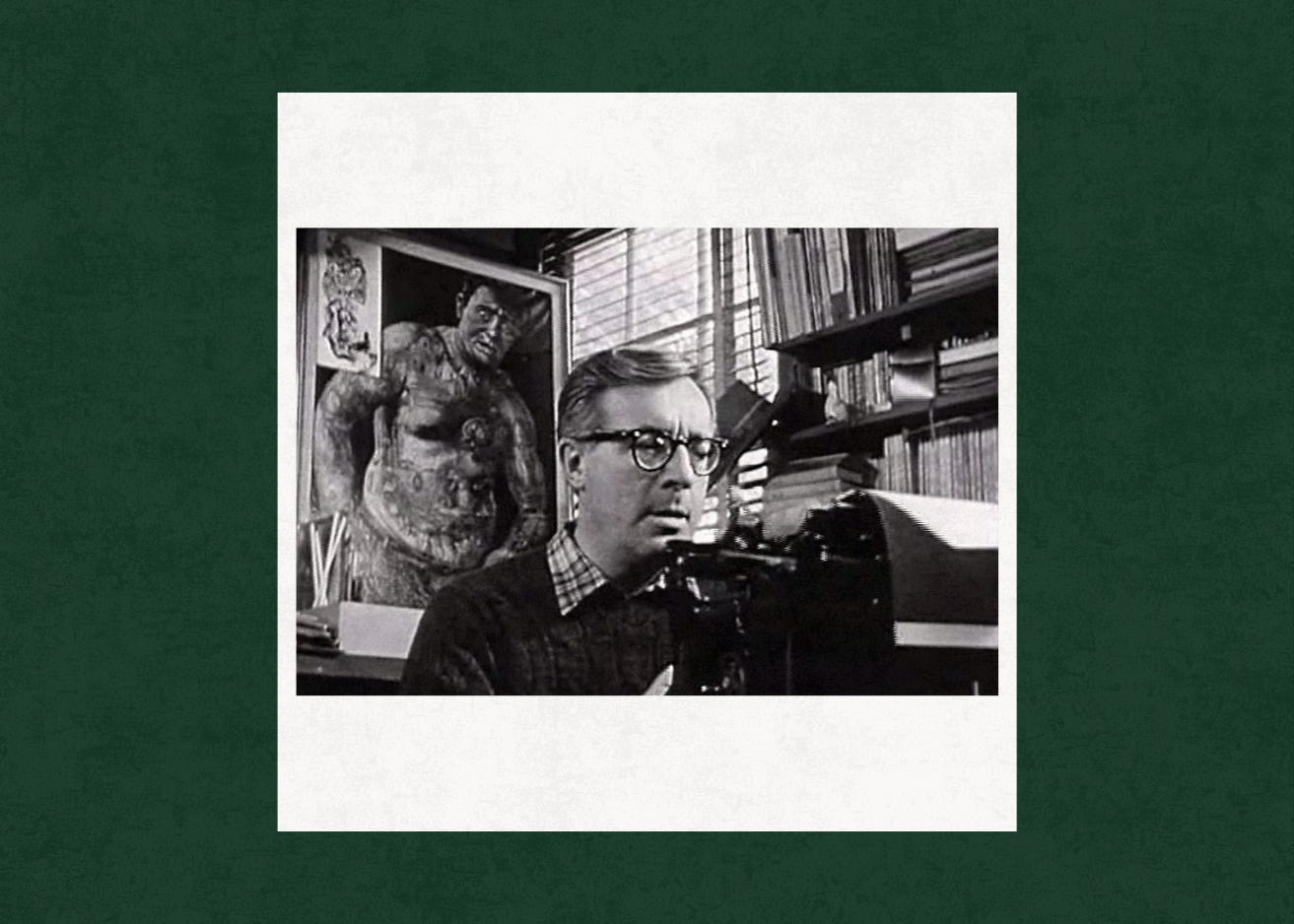
Age 41, “Ray Bradbury Speaks of Writing as Self-Discovery,” by F. A. Rockwell, The Writer’s Trade Journal, February 1962
Interviewer: How should someone begin to be a writer?
Bradbury: Begin by knowing yourself. Buy a typewriter and find out about yourself. The body of a man’s work is a map of his own territory. Dive in. Discover the things that excite you, the ones you really love. Write only from the passions. Write only what you love with all your heart or hate with all your heart. The heart will not lie to you. On the other hand, your mind can well lie to you, rationalize, give reasons for money or intellectual posturing. Amidst this confusion, turn back to your emotions, find idols to throw stones at, find beauty to admire. All the ardent and despairing things you truly are, dare to put on display. In that direction lies creativity. To write for money is to be self-conscious. To write for snobbish praise is to be self-conscious. Any self-conscious act, by its very nature, stifles, smothers the creativity in a writer. Passion can circumvent self-consciousness. Get to the business, then, of taking-in and throwing-up, with violence, with tenderness, with hatred with joy.
Interviewer: What do you consider the most important attributes for writing success?
Bradbury: Hard work, persistence and enthusiasm. I have always believed that when one writes for oneself, out of love and excitement, quantity writing results in quality writing. Quantity writing for other people, for other aims, becomes hack writing. But quantity writing when one does it for the fun and passion of discovering all about the truth inside one’s self cannot possibly result in bad writing. It can only result in more exciting discoveries.
Don’t slant. The way to destruction and ruin is laid for you if you try to write for any single magazine or market. The twin temptations of this world are to write for money or write for intellectual praise from any one clique. You are not out to make money or to win acclaim from groups, no matter how well-informed or intelligent. You are out on a voyage of self-discovery, which only indirectly must net you money whereby to survive, and praise whereby to buoy you up. But these should not be goals, only subsidiary rewards along the way. The best reward is in getting to know yourself better as time passes, to enjoy each day and the elation that comes from finally nearing and touching the truth as you see it.
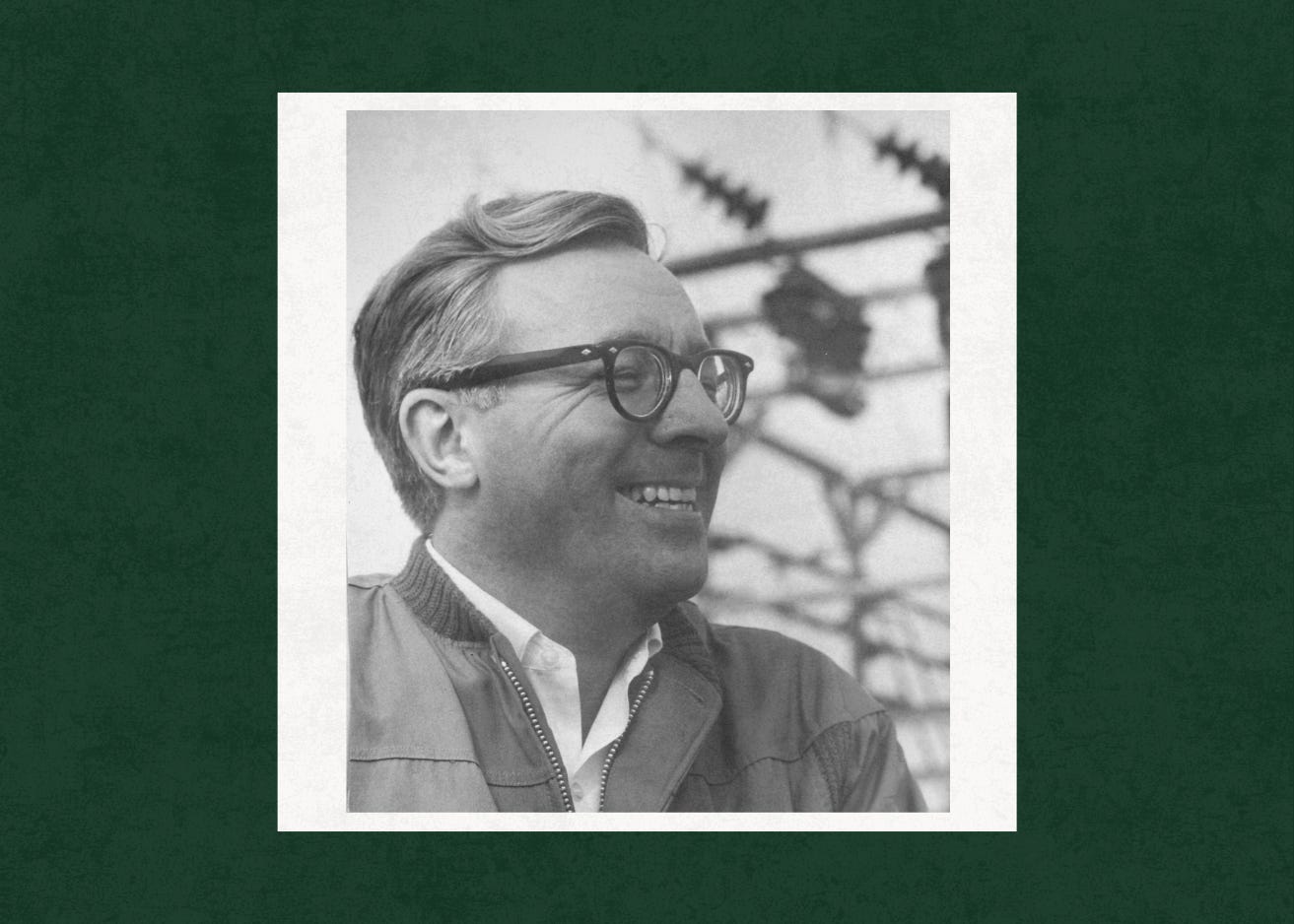
Age 42, “The Story of a Writer,” Story of... (TV Series), 1962
Student: Mr. Bradbury, how much did you make in your early years of writing?
Bradbury: The first year I made nothing. The second year I made nothing. The third year I made $10. The fourth year I made $40.
I remember these. I got these indelibly stamped in there.
The fifth year I made $80. Sixth year, I made $200. Seventh year, I made $800. Eighth year, $1,200. Ninth year, $2,000. Tenth year, $4,000. Eleventh year, $8,000.
Student: How does an artist keep going during those early years of low income?
Bradbury: Just get a part time job — anything that’s halfway decent — usher in a theater...
Unless you’re a madman — you can’t make do in the art field. You’ve gotta be inspired and mad and excited and love it more than anything else In the world.
And to hell with the relatives. And If any girl doesn’t like what you’re doing, out of your life. And if any of your friends, male friends, make fun of you, to hell with them. Out. Out.
And then you get rid of all the relatives at once. Immediately. No more Thanksgiving dinners. [Laughs]
But, it has to be this kind of “By God I’ve gotta do it. I’ve simply gotta do it.” And if you are not this excited, you can’t win.
I worry about rejection, but not too much. The real fear isn’t rejection, but that there won’t be enough time in your life to write all the stories you have in you.
So every time I put a new one in the mail, I know I’ve beaten death again.
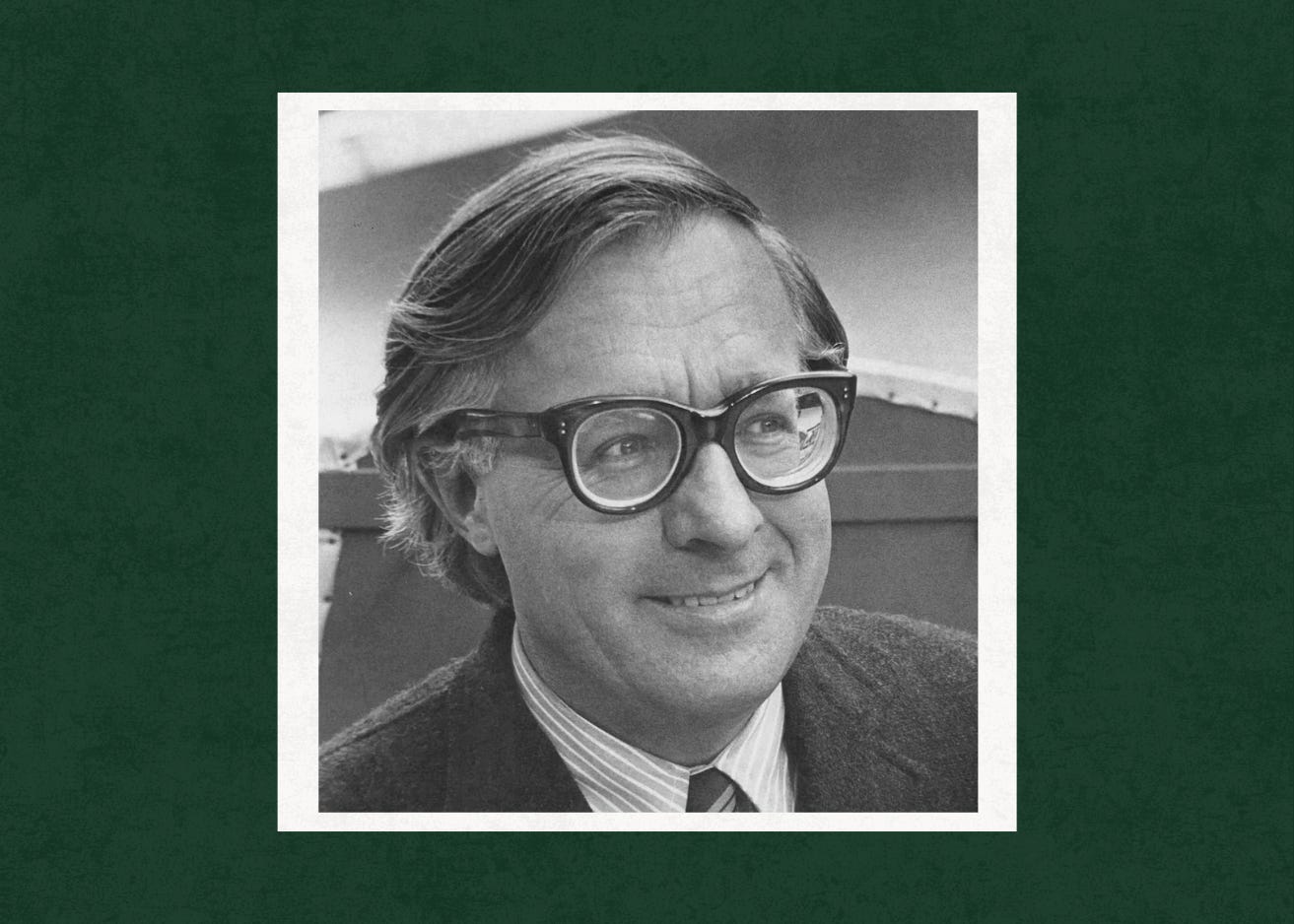
Age 47, “Ray Bradbury,” by Frank Filosa, 1967, (Collected in ‘On Being a Writer,’ by Bill Strickland, Writer’s Digest Books, 1989)
Interviewer: Could you describe a typical day, your process of writing?
Bradbury: I do a first draft as passionately and as quickly as I can. I believe a story is only valid when it is immediate and passionate; when it dances out of your subconscious. If you interfere in any way, you destroy it. There’s no difference between a short story and life. Surprise is where creativity comes. Allow your subconscious to come out into the light and say what it has to say. Let your characters have their way. Let your secret life be lived.
Then at your leisure, in the succeeding weeks, months or years, you let the story cool off and then, instead of rewriting, you relive it. If you try to rewrite, which is a cold exercise, you’ll wind up with all kinds of Band-aids on your story, which people can see. It’s very important that a story have a skin around it just as we have a skin. A story must have the same sort of life we have though it is shorter. It has this fantastic entity to itself, a need to run to its end and you just have to let it go.
The average young person you meet today seems to have the motto, “If at first you don’t succeed, stop right there.” They want to start at the top of their profession and not to learn their art on the way up. That way they miss all the fun.
If you write a hundred short stories and they’re all bad, that doesn’t mean you’ve failed. You fail only if you stop writing.
I’ve written about 2,000 short stories; I’ve only published about 300, and I feel I’m still learning.
Any man who keeps working is not a failure. He may not be a great writer, but if he applies the old-fashioned virtues of hard, constant labor, he’ll eventually make some kind of career for himself as a writer.
You can get along on a very small amount of money. You can give up clothes. You can give up movies and theater. You can eat Kraft Dinner every day of your life. I’m a student of Kraft Dinner. I’m a specialist in Campbell’s Tomato Soup. … I’m the cheapest freeloader in the history of mankind. My idea of a real meal is to sit down with a can of tomato soup, a couple glasses of milk, and a half a pound of crackers.
I went through a record of expenses I kept during my first year of marriage. At that time I was making about $30 a week writing, and my wife was making $35 at a job to support us so I could get my writing done. We’d go down to Ocean Park at night and have a couple of hot dogs and a Coke. We’d go through the penny arcade, and for 32 cents we’d have a magnificent evening.
If you have someone who cares about you, it’s very easy to give up things. If you’re alone, you buy things to compensate for your loneliness.
Money is not important. The material things are not important. Getting the work done beautifully and proudly is important. If you do that, strangely enough, the money will come as a just reward for work beautifully done. A tape recorder, an automobile, they don’t really belong to you. What really belongs to you? Yourself, you. That’s all you’ll ever have.
Bradbury: In the last seven years I’ve turned down 15 TV series offers I could have had on my own. I choose to stay free and float easily and keep an eye on myself. A writer must have the firm, hard ability to turn his eye inward upon himself. You write because it’s an adventure to watch it come out of your hands. The publicity is pleasant, but it never belongs to you. You’re never quite convinced the name on that printed page is you. Again you’re tuned back on your hidden self, aren’t you? That’s all you’ll ever have. One’s own thoughts, these are the most important things. Not the thoughts of others, because you’ll never understand them. You’ll never understand another writer. You’ll never understand your wife or your children or your best friends. You may try to but you can only understand them through yourself. You see a lot of people around who are trying to understand other people, to find out what makes them tick. But they are looking away from the true object in their creativity. They should ask, “What makes me tick?” They, not others, are the true object.
Interviewer: Is that why you write? To understand yourself?
Bradbury: I know this now. I didn’t know then.
Interviewer: Do you think a writer’s object changes as he goes along? He starts out writing for one reason and continues for others?
Bradbury: I think he starts out with mistaken concepts and then he falls into the prime causes as he writes. He digs those out of the subconscious. He nails himself to the cross of his typewriter. He must crucify himself in order to discover himself.
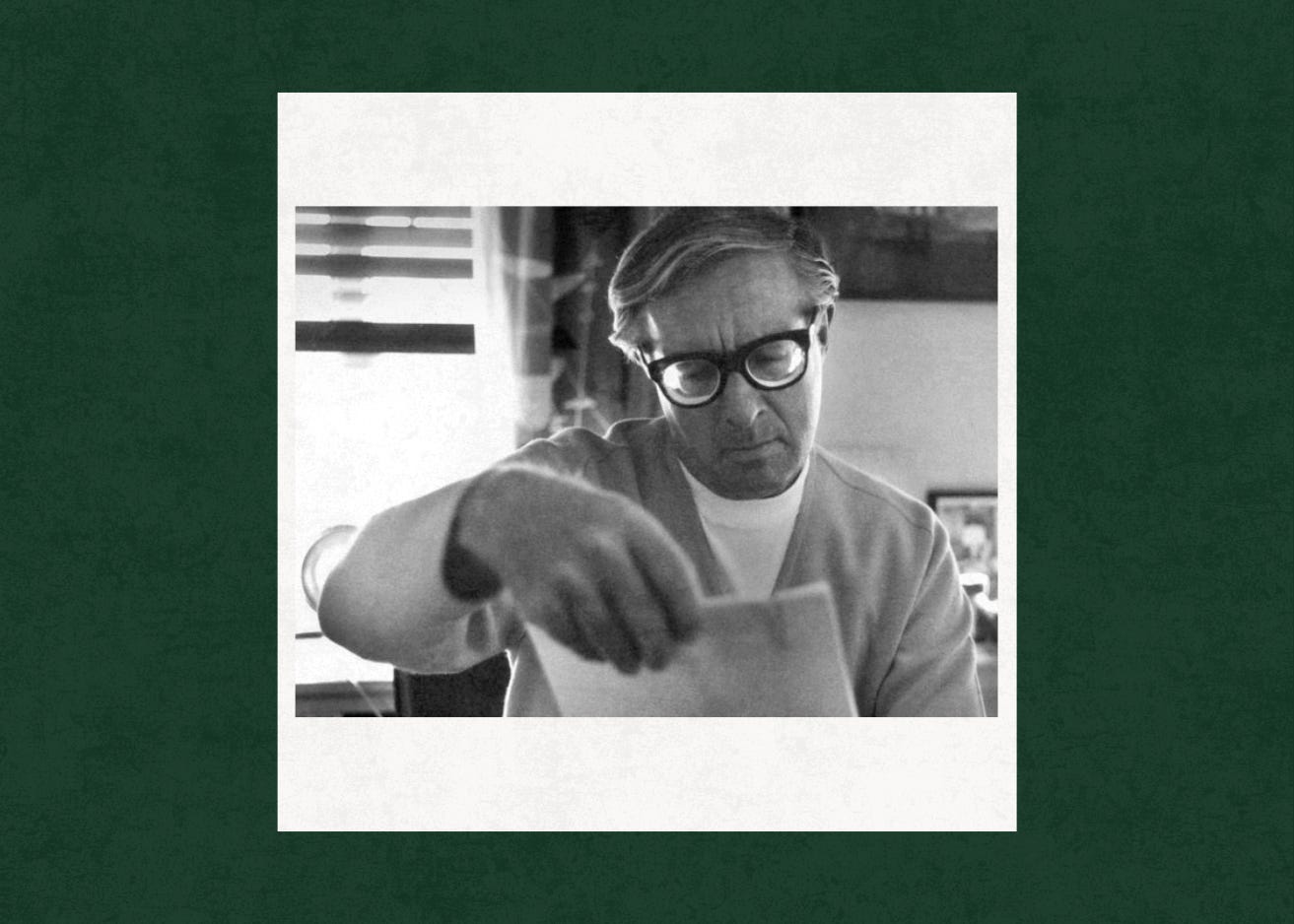
Age 48, “The Illustrated Bradbury,” CBC (Telescope), January 9, 1969
I write books about burning books so that people won’t burn books.
It’s that simple.
I write stories about people destroying themselves so that people won’t destroy themselves. I write stories about people being prejudiced so that people will not be prejudiced.
It’s always the reverse. Any negative story that I do has a positive offprint. What you take away from it should be the positive that is printed from the negative.
So, I’m not predicting these futures. I’m writing the story so those futures won’t happen. I’m trying to shape the future by being critical of it. I’m trying to be as honest about our violence as I can be so that the violence won’t occur.
I think the greatest thing that’s ever happened in the history of the world is the invention of the motion picture camera and projector.
I think more good has come into the world because of the fact that, with a bit of film and with these science-fictional machines, we are able to be black when we’re white, to be female when we’re male, male when we’re female, to become a Catholic for two hours when we’re a Jew, to be a Jew for a few hours when we’re a Muslim, and discover suddenly that across that wall of flesh, and sex, and religion, and politics, are human beings.
When you see a film like War and Peace — the Russian version which has just been made, six hours long — and when you come out the other end, you’re in tears, and you suddenly say, “My God, why didn’t I think? Why haven’t I thought more often? The Russians are people! They’re not symbols. They’re not automatically an enemy with a capital E.” Just as we, on this side, are not the enemy with a capital E.
We’re two groups of people on a miraculous world who know nothing of how we got here, who know nothing of where we’re going. So shouldn’t we fuse somewhere along the line? Forget the labels. We must.
Because there’s only one race, essentially, in this world — one race of people, three billion strong. And these petty wars, these petty labelings, these things whereby we scarify our own flesh, are ridiculous.
So the motion picture device is a machine that I admire and want to work with, so that I can teach more people how to be black and yellow and red and white and human.
Because humanity is not a shape, or a color, or a size. It’s an essence.
We are the tension-collecting animals of this world. We are that particular creature who decides to put away violence most of the time. ... We save things. We are the only creature in the world that does this. Every other animal acts in the instant to destroy or run from destruction. We choose not to do so. We build walls; we build cities.
And so, inside these cities, inside these walls, we need artists — we need people, like myself, who take hold of a piece of reality and say, “This is what it is.”
We’ve saved up attention for tears, so I, as a writer, come along and try to help you cry at the right time. We save up attention for laughter — perhaps for our silly politicians — and I come along as a writer and help you to laugh. We save up tensions of murdering. The wonderful fact about civilization is that most people do not murder, that most of us are peace-loving, that we do make do in the best sense. So I come along with a story and enable you, for an hour, to murder — so that the next day you don’t have to do it in reality.
Nietzsche puts it beautifully: “We have art that we do not die of reality.” Reality is too much with us.
I think we know all of the basic facts of life, each of us. We know too much about death. We know too much about age. We know too much about love that sometimes fails us. People do go away. People do vanish. Friends go off over the world and never come back. Our children finally go out into the world on their own. All of us, finally, leave the fact of existence.
What I try to do is go to my typewriter and, many days, experiment with words to find out what my tension is. Do I need to laugh or cry on a particular day? I don’t know. Sometimes I don’t know.
So I begin to type any word that comes into my mind: the dwarf, the night, the lake, the wind, a time machine.
And then I say to myself, “Why have you put that word down there? Why have you written ‘the nursery,’ for instance, on the typewriter? What kind of nursery? Where?” A nursery in the past? No. The present? No. What about the future? What would a nursery be like in the future?
Well, it would be automated. It would provide you with an environment, let’s say, so that you could go into that nursery and command it to take you to South America, or Africa, or the North Pole — and suddenly you’re surrounded by the three dimensions and color of that environment. All right, put your children in such an environment. Show that environment to the parents. What does this do to the family relationship?
And suddenly you’re off and flying — all because you dared to put on paper the words “The Nursery.” You didn’t even know the story was in you, but you go with it.
Age 52, “Ray Bradbury: On Hitchcock and Other Magic of the Screen,” by Arnold R. Kunert, Journal of Popular Culture, 1973 (Interview took place in 1972)
Everything I’ve done is flawed. Most of what is written or has been written over the years is flawed in some way. Moby Dick is flawed. Shakespeare’s plays are flawed, full of carbuncles, acne, and pimples. They just happen to be brilliant and eternal.
So, what the hell! You go with your own flaws. It’s part of growing. Getting accustomed to the way you look is growing. We would all like to be Steve Reeves and lift 400 pounds, I suppose, but that’s not our destiny.
Some of my literary children are very common and plain. Some are quite beautiful with moles on their cheeks. I really have a very relaxed attitude toward my screenplays, my plays, my novels, and so on.
Age 53, “Day at Night: Ray Bradbury,” Interview by James Day, CUNY TV, January 21, 1974
The ability to fantasize is the ability to survive. The ability to fantasize is the ability to grow.
Boys and girls at the age of 10, 11, 12, 13, right on up through, the most important time of their day or especially at night before going to sleep is dreaming themselves into becoming something and to being something.
So when you’re a child you begin to dream yourself into a shape. And then you run into the future and try to become that shape. When I was 10, 11, 12, I began to dream of becoming a writer, and the rest of my life has been the real task of shaping myself to that boyhood thing.
I’ve had a sign over my typewriter for 25 years now, which reads: “Don’t think.” You must never think at the typewriter — you must feel. Your intellect is always buried in that feeling anyway. You collect up a lot of things there. You do a lot of thinking away from your typewriter, but at the typewriter you should be living. It should be a living experience.
The worst thing you do when you think is lie. You can make up reasons that are not true for the things that you did. What you’re trying to do as a creative person is surprise yourself, find out who you really are, and try not to lie — try to tell the truth all the time.
The only way to do this is by being very active and very emotional, and getting it out of yourself — making lists of things that you hate and things that you love. You write about these, then, intensely. When it’s over, then you can think about it. Then you can look at whether it works or doesn’t work: “Something’s missing here.” And then, if something’s missing, you go back and re-emotionalize that so it’s all of a piece.
But thinking is to be a corrective in our life. It’s not supposed to be the center of our lives. Living is supposed to be the center of our lives. Being is supposed to be the center — with correctives around, which hold us, like the skin holds our blood and our flesh in. But our skin is not a way of life. The way of our living is the blood pumping through our veins, the ability to sense and to feel and to know. And the intellect doesn’t really help you very much there. You should get on with the business of living.
The typewriter should be an Ouija board. Your hands move on it and reveal things about yourself you don’t know.
For instance, in my novel Fahrenheit 451, my character Montag is myself, discovering me. There are those sides of our character which are destructive, and you bring them out in the open, and then you find ways of becoming creative. So the character of Montag is a totalitarian who discovers he’s burning not just books, but ideas. Then he sets out in search of rediscovering himself — discovering how to read, and how to be alive through reading. And then he gives up his profession and becomes a destroyer of the destroyers, and comes out on the right side of the situation.
Bradbury: I use the library the same way I describe the creative process as a writer. I don’t go in with lists of things to read. I go in blindly and reach up on shelves and take down books and open them and fall in love immediately. And if I don’t fall in love that quickly — shut the book, back on the shelf — find another book and fall in love with it. You can only go with loves in this life.
Interviewer: What about reading lists?
Bradbury: They can’t help you most of the time. You’ve got to prod around everywhere. People don’t have any fun because they don’t ever go in the children’s section, but I go over in the children’s section all the time. I try to keep up on what’s being done in every field. Most children’s books are ten times more enjoyable than the average American novel right now.
So I looked on the shelves of the children’s library years ago, and I said, “I want to lean cheek by jowl, shoulder to shoulder, with my real heroes: Mark Twain, Charles Dickens, Robert Louis Stevenson, Edgar Allan Poe.” And as a result of this kind of emotional thing — rejecting all the modern American novelists, most of them in the last 20 years — I have become a father to a lot of children, and these books are indeed leaning against the shoulders of good old Charlie Dickens and Mark Twain.
Interviewer: Some of your stories seem almost to be a protest against the overwhelming mediocrity of life. And yet I’ve seen you defend mediocrity, defend the junk of life as part of its joy.
Bradbury: I think we have to have every kind of knowledge there is. In order to become excellent, you first have to be mediocre — which only means “medium,” anyway. A lot of people use it very pejoratively, thinking that it means “poor.” It doesn’t mean “poor” at all; it just means “medium.”
I believe in raising children with all these fabulous junks, because I was raised on them. I found they were good food, and they helped me to grow. It’s like putting blood manure on roses — you have to have a little of everything.
You can’t appreciate Shakespeare until you’ve read Edgar Rice Burroughs. And you need both of them in your life. I spend my evenings wildly changing styles, from reading Shakespeare at the start of the evening to reading James Bond at the end of it. There’s room in your head for all this. It’s not going to contaminate you. It’s not going to corrupt you. And it gives you, then, such a complete education.
Age 59, “Interview with Ray Bradbury: An Earthbound Traveler,” by Stephen Banker, The Washington Post, September 9, 1979
The reason I shift gears constantly, why I’m doing an opera, why I’ve done essays, why I’ve written poetry for years that nobody wanted, why I do short stories and novels and screenplays... is so I will have new ways of failing.
This means becoming a student again. I believe in creative failing — to continue to write poems that fail and fail and fail until a day comes when you’ve got a thousand poems behind you and you’re relaxed and you finally write a good poem.
Interviewer: You have said that libraries played a large part in your education. How so?
Bradbury: Even as a child, I found libraries enchanting. They were watering places, jungle country. I loved libraries at night, the old-fashioned ones where you were surrounded by shadows. And there were pools of green illumination -- from those wonderful green-shaded lamps that were on every table -- where you could go to drink. You get the books off the shelf and smell the pages: elephant India and the incenses of Madras, the paprikas and cinnamons of ancient Egypt. You take the books, you lie there in the pools of light and you drink life. That is how intensely I have loved libraries.
When I graduated from high school, there was no chance of my going to college, so I put myself into the downtown Los Angeles library and graduated from there when I was 28.
Interviewer: You made out your own course of study?
Bradbury: I read everything that I could in every section. I gave myself an education in art history, philosophy, theology, the short story, the mystery story, essays, poetry, you name it. In some places, not very deep. In other places, complete. I just ran amok. When I found an author who enchanted me — like Somerset Maugham, one of the happiest accidents of my life — I read everything. I ramble libraries, I don’t plan anything. I just climb the stacks like a chimpanzee.
We write science fiction because it puts us at one remove from the reality we exist in. If I sat down today and did a story on what automobiles have done to us — they’ve killed 2 million so far and they would kill another 2 million every year — that would be a bore because we already know it.
If I were going to write about that problem, I’d put it ahead 40 or 60 years and do a story like “The Pedestrian,” in which a man is arrested and taken to an insane asylum because he goes for a walk at night.
It’s very much like the old legend of Perseus and Medusa. Medusa was very real, Medusa is now. Perseus had a bronze shield, which is the future. He wants to kill Medusa, but if you look at her she will freeze you. That is what now does, it freezes us so we can’t move. So what do you do? You look in the bronze shield, which is a mirror. You see where Medusa is, and you reach behind you with your sword and you cut off Medusa’s head.
That’s what science fiction is. It’s Perseus and Medusa and the shield.
Age 65, “Ray Bradbury’s Nostalgia for the Future,” by Timothy Perrin, Writer’s Digest, February 1986, (Collected-In: Just Open a Vein, Re-titled as “Ray Bradbury’s Children,” Edited by William Brohaugh, 1987)
I began to get really good after ten years.
I started when I was twelve and when I was twenty-two I wrote a short story called ‘The Lake.’
It was about a real little girl I knew when I was eight or nine years old. She went into the lake and she never came out. That stayed in my mind until I was twenty-two and then I remembered. When I finished that story, I burst into tears and I knew that I had turned a corner in my life, that I had dredged up something. From that time on, I began to go deeper and deeper and deeper.
All of the good, weird stories I’ve written are based on things I’ve dredged out of my subconscious. That’s the real stuff. Everything else is fake.
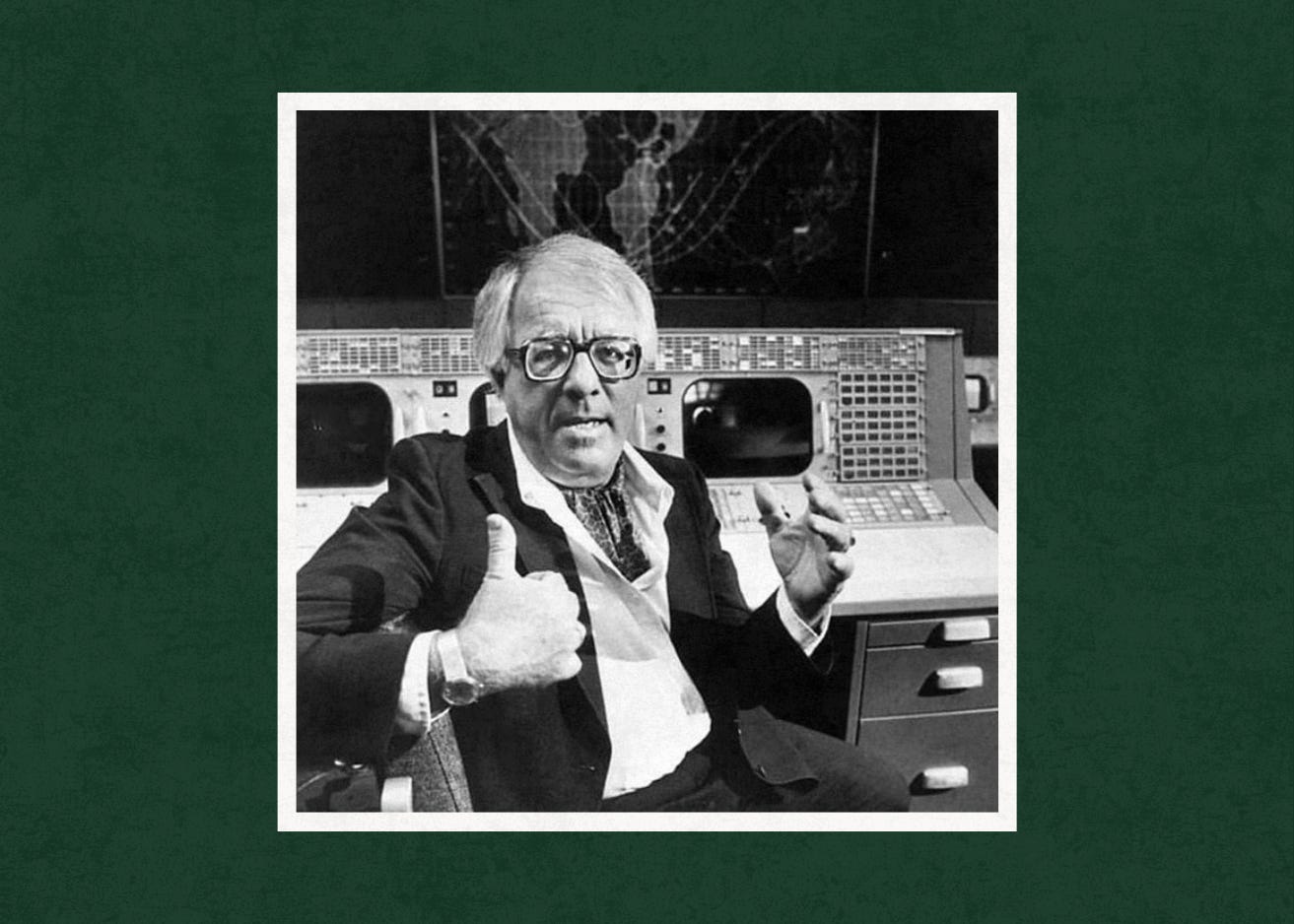
Age 72, “Bradbury Still Believes In Heat Of ‘Fahrenheit 451,’” by Misha Berson, The Seattle Times, March 12, 1993
The problem in our country isn’t with books being banned, but with people no longer reading. Look at the magazines, the newspapers around us — it’s all junk, all trash, tidbits of news.
The average TV ad has 120 images a minute. Everything just falls off your mind.
You don’t have to burn books to destroy a culture. Just get people to stop reading them.
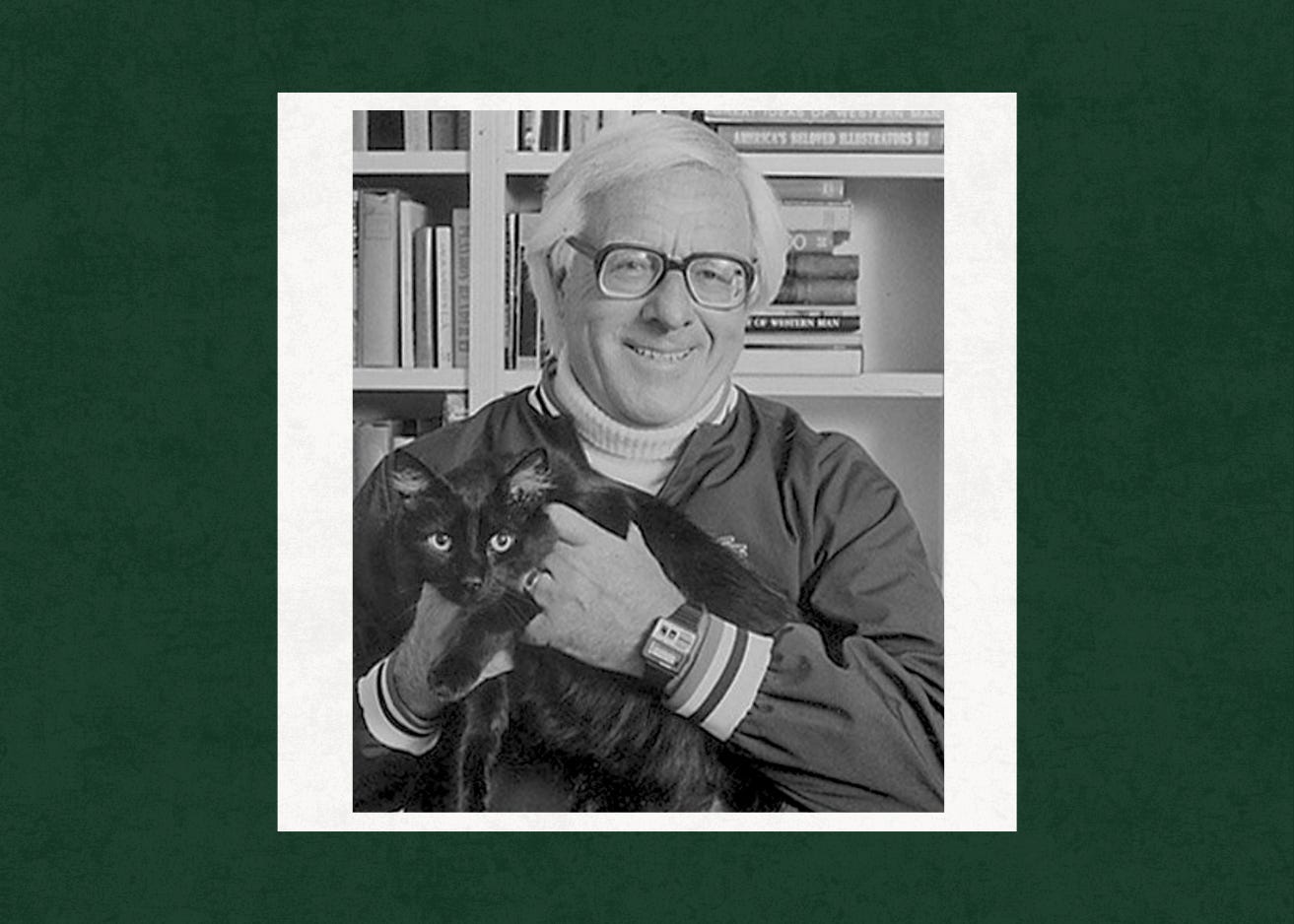
Age 76, “Bradbury: An Optimist,” by Paul Freeman, San Mateo County Times, January 28, 1997
The people who have mental blocks are the people who do things they shouldn’t be doing. The people who take screenplays they shouldn’t write or books they shouldn’t write — they’re going to wind up with dry spells, because their subconscious says, ‘I’m going to cut off the water works!’
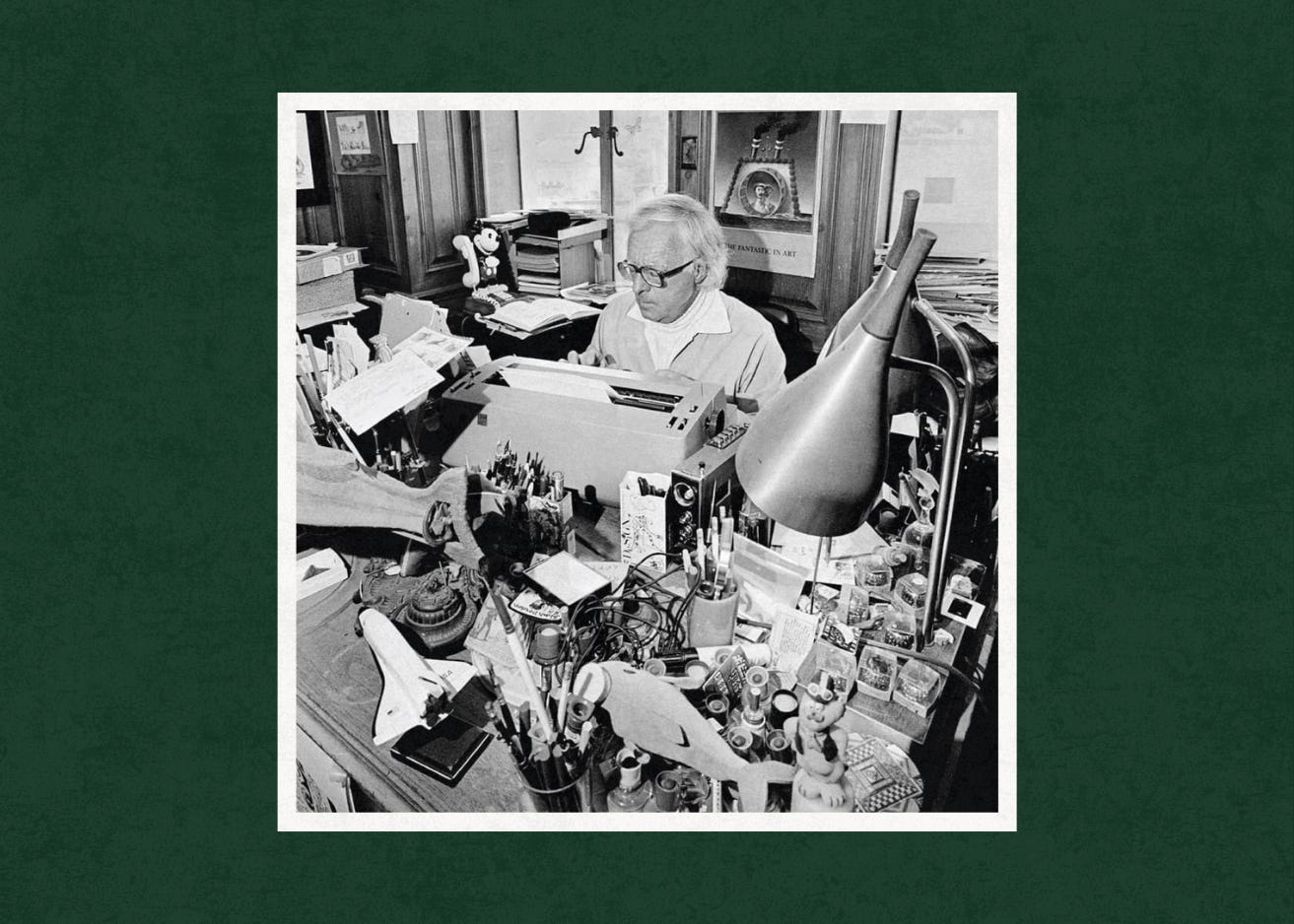
Age 79, “An Interview With Ray Bradbury,” by Devin D. O’Leary, Alibi, 1999
Interviewer: What purpose does it serve to read things that aren’t real?
Bradbury: It makes us dream and it makes us accomplish. Einstein had to dream first, didn’t he, before he wrote his theorem? Darwin the same way. The Wright brothers had dreams of flying. They lay in bed at night at the end of the 19th century and said, “I wonder how we can put wings on our bicycles?” And they finally did it. You’ve got to read myths—Greek myths, Roman myths, Egyptian—and you have to dream yourself into being. The purpose of fiction is not to nail you to the ground as facts do, but to take you to the edge of the cliff and kick you off so you build your wings on the way down.
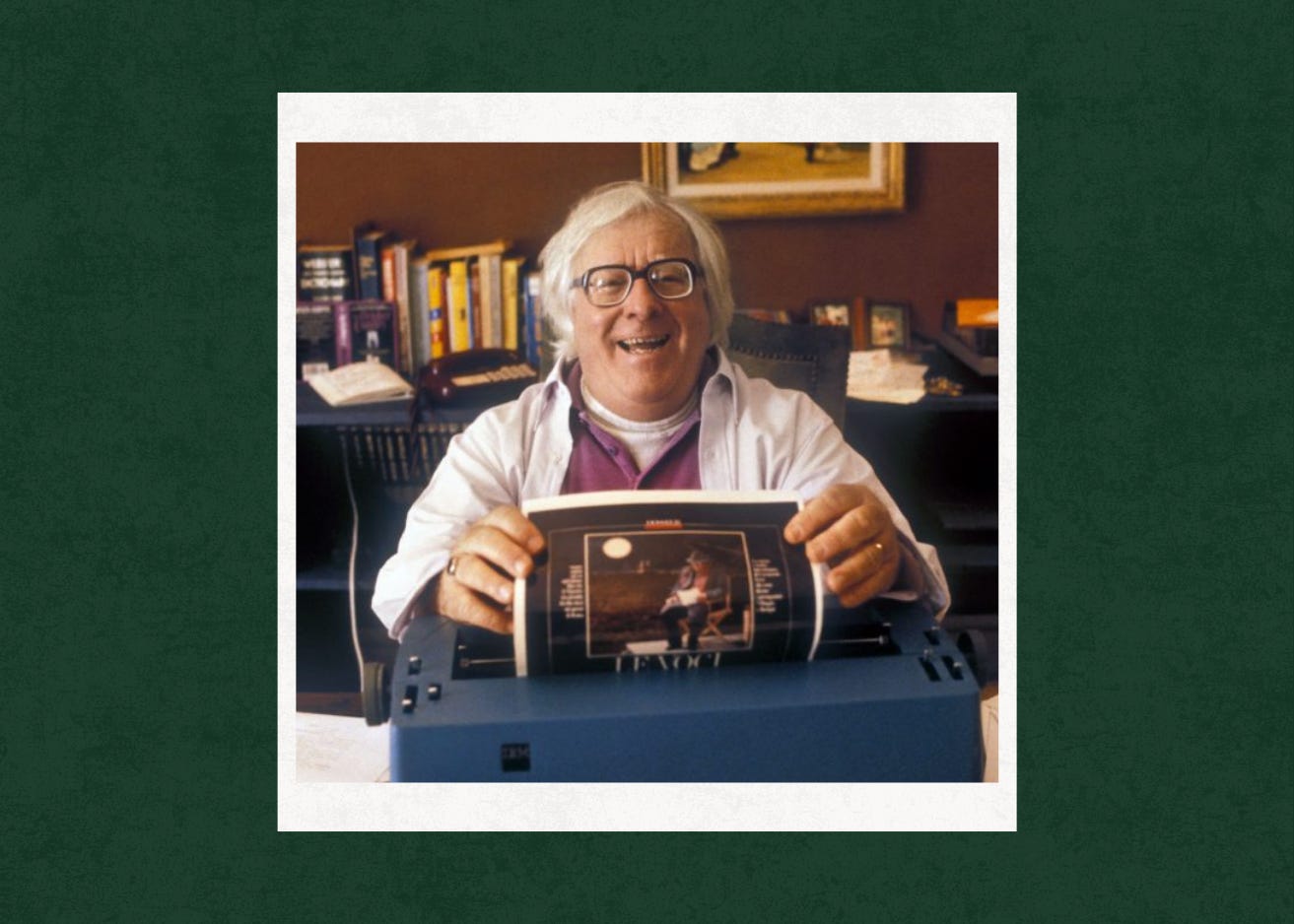
Age 83, “Ray Bradbury Interview,” Barnes & Noble, Summer 2003
Every day at 9:00 a.m., for two hours, I begin a new short story, sometimes finishing it, or write an essay or poem. This routine has continued for sixty-five years.
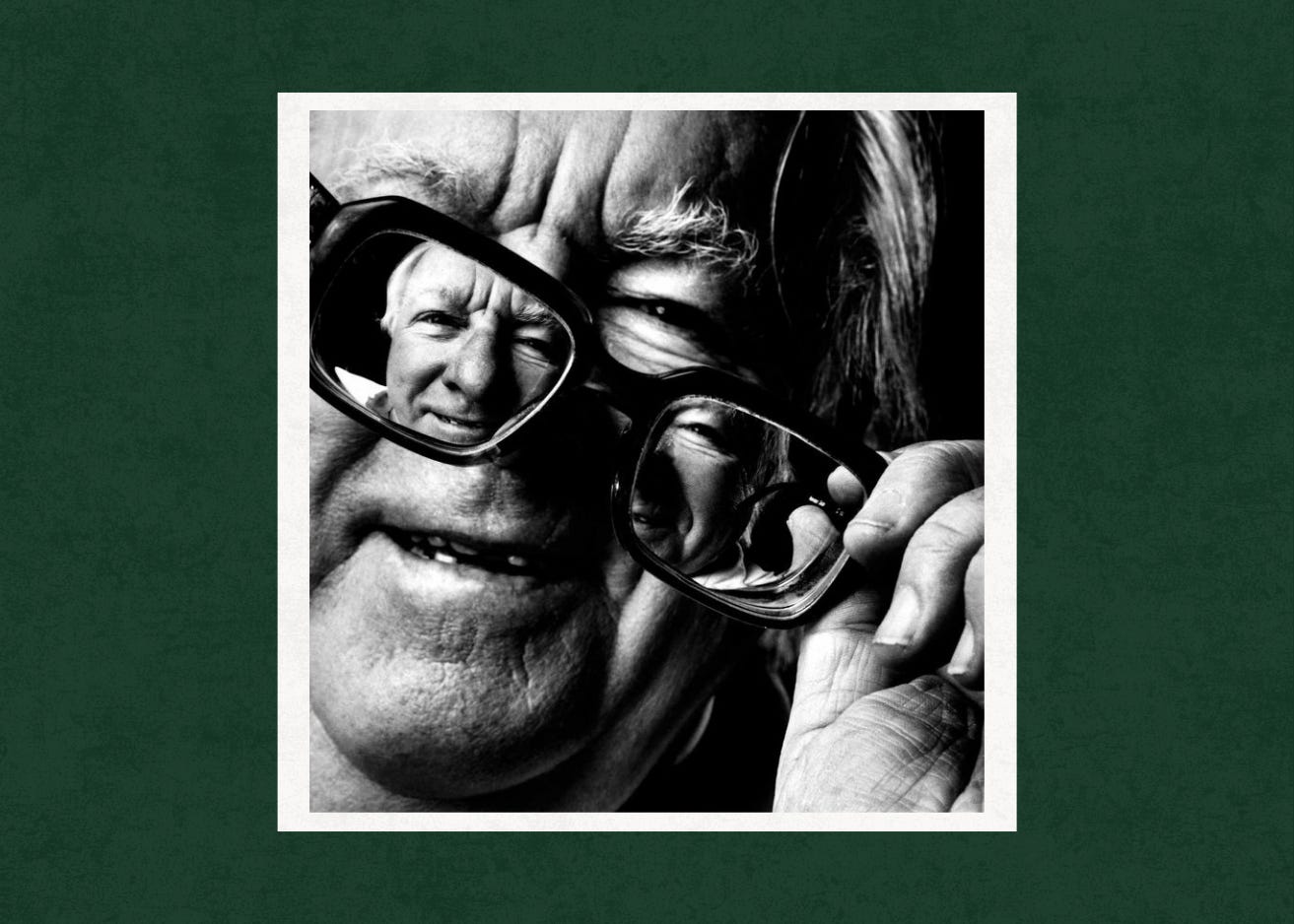
Age 88, “A Literary Legend Fights for a Local Library,” by Jennifer Steinhauer, New York Times, June 19, 2009
Libraries raised me.
I don’t believe in colleges and universities. I believe in libraries because most students don’t have any money.
When I graduated from high school, it was during the Depression and we had no money. I couldn’t go to college, so I went to the library three days a week for 10 years.
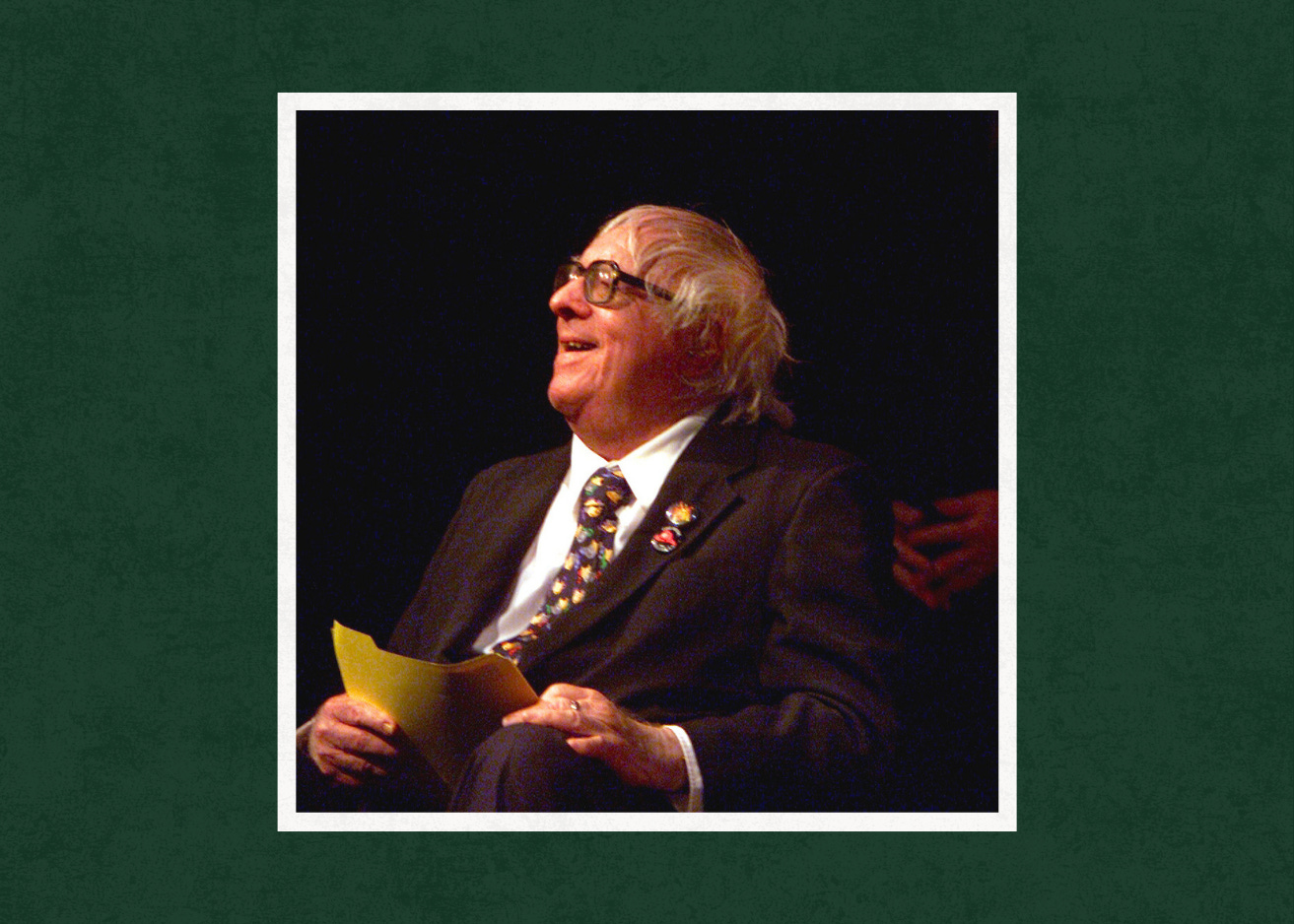
Age 90, “Q&A: Ray Bradbury,” by Rachel Goldstein, Time, August 23, 2010
All of my life, I’ve jumped off the cliff and built my wings. It works every single time. It never fails.
This post is part of a growing collection:
My Favorite Things Great Artists Said About The Creative Life

The creative life is hard. So I’m finding what great artists had to say about it.