

How Ray Bradbury Educated Himself Without Going to College
In his own words...

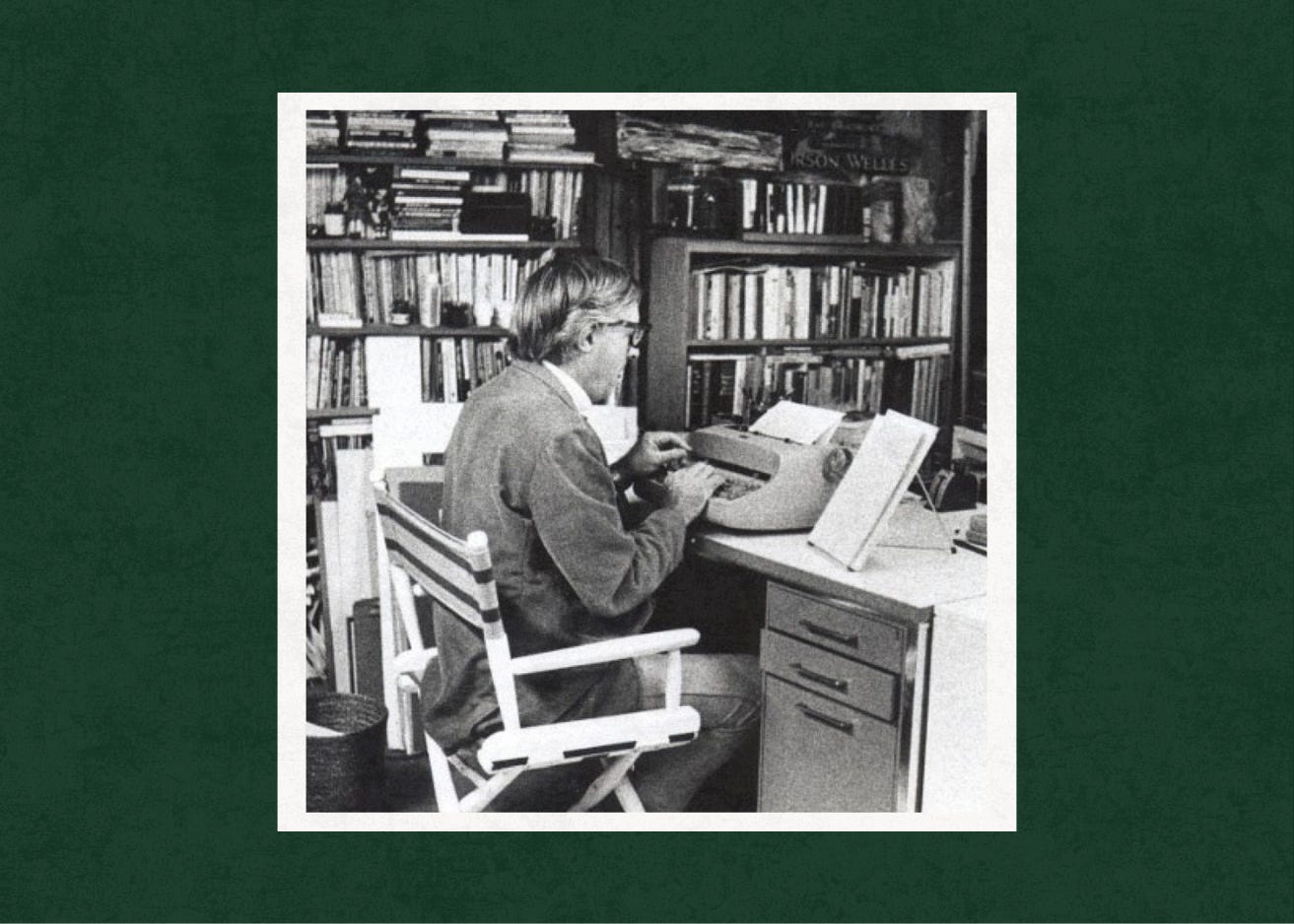
Ray Bradbury couldn’t afford college.
But by 28, he’d given himself a better education than money can buy.
Here’s how he did it, in his own words:
“Libraries raised me.
I don’t believe in colleges and universities. I believe in libraries because most students don’t have any money.
When I graduated from high school, it was during the Depression and we had no money. I couldn’t go to college, so I went to the library three days a week for 10 years.”
— Age 88, New York Times, June 19, 2009
“We had nothing. Nothing except the library, which was everything.
I educated myself in the library by going there three, four times a week from the time I was eighteen until I was twenty-eight.
I read everything. I went through all the short stories of all the major countries. I read all the major writers in the short story fields. I read all the major plays. I read all the major poetry. It doesn’t take that much time.
Two hours a day for ten years and you have read everything. Some of it you’ve read six or seven times.”
— Age 65, Writer’s Digest, February 1986
“Even as a child, I found libraries enchanting. They were watering places, jungle country.
I loved libraries at night, the old-fashioned ones where you were surrounded by shadows. And there were pools of green illumination — from those wonderful green-shaded lamps that were on every table — where you could go to drink.
You get the books off the shelf and smell the pages: elephant India and the incenses of Madras, the paprikas and cinnamons of ancient Egypt. You take the books, you lie there in the pools of light and you drink life.
That is how intensely I have loved libraries.”
— Age 59, The Washington Post, September 9, 1979
“I use the library the same way I describe the creative process.
I don’t go in with lists of things to read. I go in blindly and reach up on shelves and take down books and open them and fall in love immediately.
And if I don’t fall in love that quickly — shut the book, back on the shelf — find another book and fall in love with it.
You can only go with loves in this life.”
— Age 53, Day at Night, January 21, 1974
“In fact, going to college to become a writer is the worst thing you can do, because you are not following your own tastes.
What you need to do is develop your strong bent, whatever it is. If you are going to be a mystery writer, be a mystery writer. If you are going to write science fiction, write science fiction.
But colleges don’t understand that. They’re not going to encourage you to do something that you love.”
— Age 65, Writer’s Digest, February 1986
“There is no way of educating ourselves that is wrong.
We must try everything. We cannot be snobs. We must grow up surrounded by mediocrity so we can identify it; so we can identify excellence when we encounter it.
If you don’t learn to know what is good, what is bad and what is excellent, then you snobs, like the politicians, will be doomed to repeat the mistakes of history.”
— Age 47, The Press-Courier, December 6, 1967
I think we have to have every kind of knowledge there is.
In order to become excellent, you first have to be mediocre — which only means ‘medium,’ anyway. A lot of people use it very pejoratively, thinking that it means ‘poor.’ It doesn’t mean ‘poor’ at all. It just means ‘medium.’
I believe in raising children with all these fabulous junks, because I was raised on them. I found they were good food, and they helped me to grow. It’s like putting blood manure on roses — you have to have a little of everything.
You can’t appreciate Shakespeare until you’ve read Edgar Rice Burroughs. And you need both of them in your life.
— Age 53, Day at Night, January 21, 1974
More discipline in educating himself than 99.99% of the world. 10 years of going to the library. Dedicated.