


Björk recorded her first album she was just 11 years old. And has been making music ever since.
She also gave us hundreds of interviews where she talked about what living a creative life was actually like.
What follows are my favorite things I’ve found (so far)…
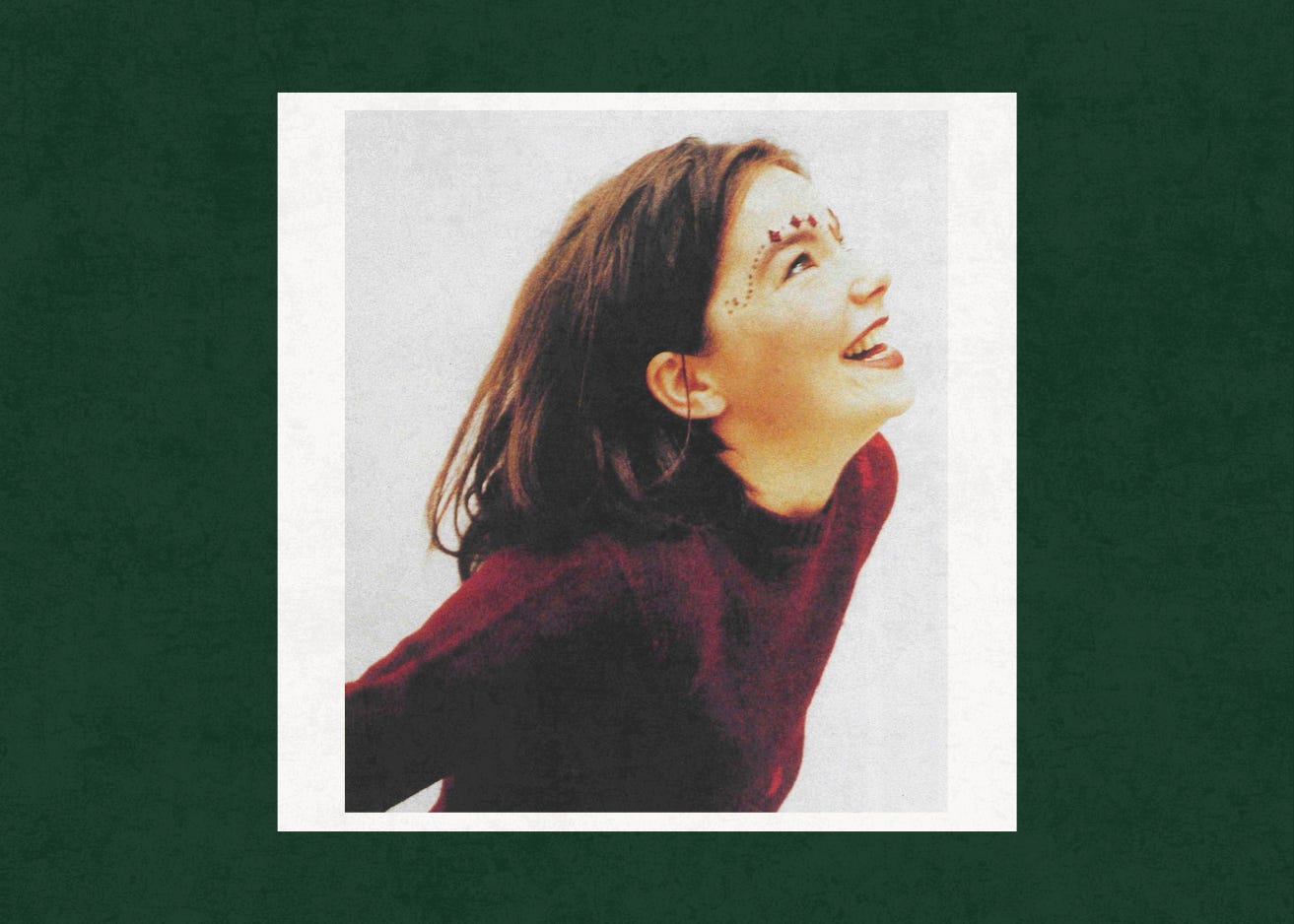
Age 28, “Björk Free,” by Ekow Eshun, The Face, November 1993
Björk: There’s nothing better than waking up in the morning in the middle of nowhere. You can do whatever you want, just shout at the top of your voice and be absolutely free.
Interviewer: What’s so important to you about having freedom?
Björk: I dunno. I guess it’s just being able to do what you want to do. It doesn’t really take explaining, does it? It’s like looking at a menu. Why do you want a piece of cake and not an apple? Who knows?
But the point is you want it.
There were so many things I wanted. To be a singer, a skateboard champion, to experience meditating in a Buddhist temple. I’ve always been very aware that you only have one life, and you have to try as many things as possible.
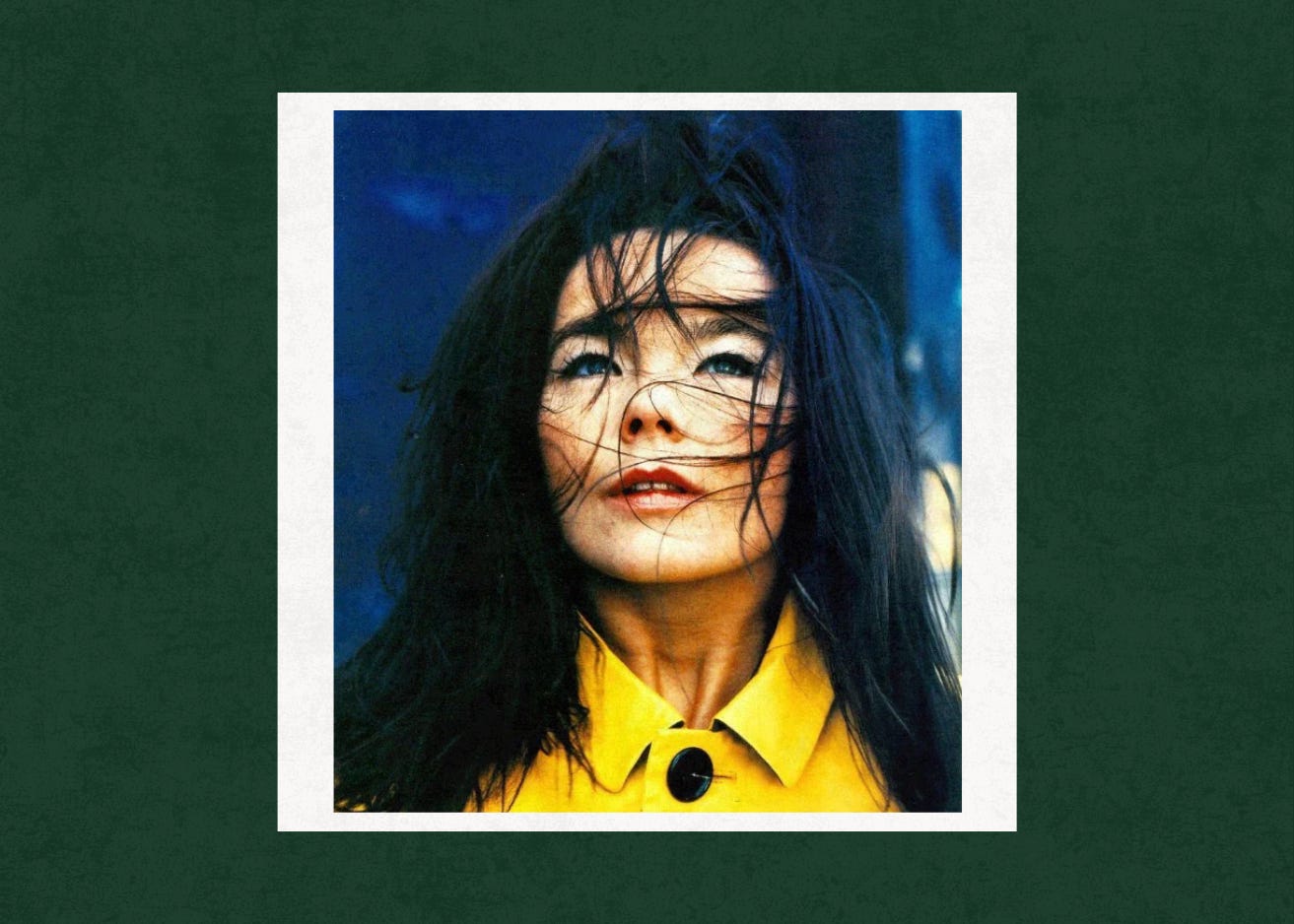
Age 29, “Björk Guðmundsdóttir Speaks,” by Tim van Holder, Oor, June 1995
In many ways, Debut was still much in the sign of conflicts. Conflicts with myself and with the outside world. I was wondering whether I had the right to fill an album with nothing but my own songs. Could I be so selfish? And did I have the right to tell others what to do? I didn’t think so.
That was a little bit my problem: I really wanted to work with other people, but I didn’t want to dominate them. I wanted those people to surprise and stimulate ME. If I knew exactly what they were going to do, I was no longer interested. I had to get something in return. But that has changed a lot by now; I learned what is necessary, the past two years.
I mean, I grew up with the Punk state of mind: I really believed in anarchy and thought that one person shouldn’t be controlled by another. But it’s not that simple. True, it is a beautiful philosophy and I still believe in it for a part, but if too many people work on the same thing, it loses its identity. Like if a large number of people build one house and everyone puts in some ideas of their own, then it’s no longer a house; then it’s a compromise.
I for one don’t have any problems respecting other people’s ideas or visions. I’ve made film music in the past and I tried to completely enter into the state of mind of the filmmaker. I tried to make the music that was necessary for his film. But I did, within the confines of the film and the ideas behind it, go my own way. Because of that I learned to trust that others, when they work on my albums, will do the same thing. I’ve learned to respect them and give them the freedom they need. But I set the limits.
I’ve shaken two more inheritances from the punk ideology: firstly, the conviction that musical ineptitude also means musical freedom. Those punk bands can say what they want, but that is absolute bullshit. If you don’t have any technique, if you don’t know what you’re doing with your instrument, then you don’t have a lot of freedom, no, then you are very limited: your horizon is very small. The more knowledge and technique, the more space and freedom.
The same goes for discipline. I used to think that discipline stood in the way of any form of free expression. But the contrary is true. If you can, like I now can, gather enough discipline to, for instance, do interviews for twelve days and talk about nothing but yourself all that time, you create an enormous freedom for yourself: you can say what you want.
Secondly, there was the stubborn clinging to the do-it-yourself principle; I got rid of that as well. The annoying things, the dirty jobs, I still do myself because I think I’m responsible for that, but creatively I work with as many people as possible.
Over the last few years I learned that one and one isn’t necessarily two: the result of your input and that of someone else usually has a little extra. So one and one is often three. And since I know that, I’m capable of doing 900 interviews without getting suicidal tendencies, or playing the same song five times a week when I’m on tour without getting bored with it. I know that the sum of time, place, things and people always has a different result. Things like that make my job something exciting, something precious.
Luckily, my punk roots have never led to a political position. I know it’s a cliche, but I don’t think I have the right to tell other people what to do or how to think. My political conviction is inside of me.
It’s about choices like: do I control you or should you control me? I love him; do I have to make him love me as well? This girl wants to kill herself; should I try to get her to change her mind, or is it her own choice? Should I give or take? That’s what it’s all about with me.
That is, as far as I’m concerned, what pop music is all about: helping people with their personal politics, their emotional problems and how they have to sympathize with that. Not by forcing things on them, but by showing them how I feel about certain things. Then they can do what they want with that. I prefer doing that over offering ready-made solutions.
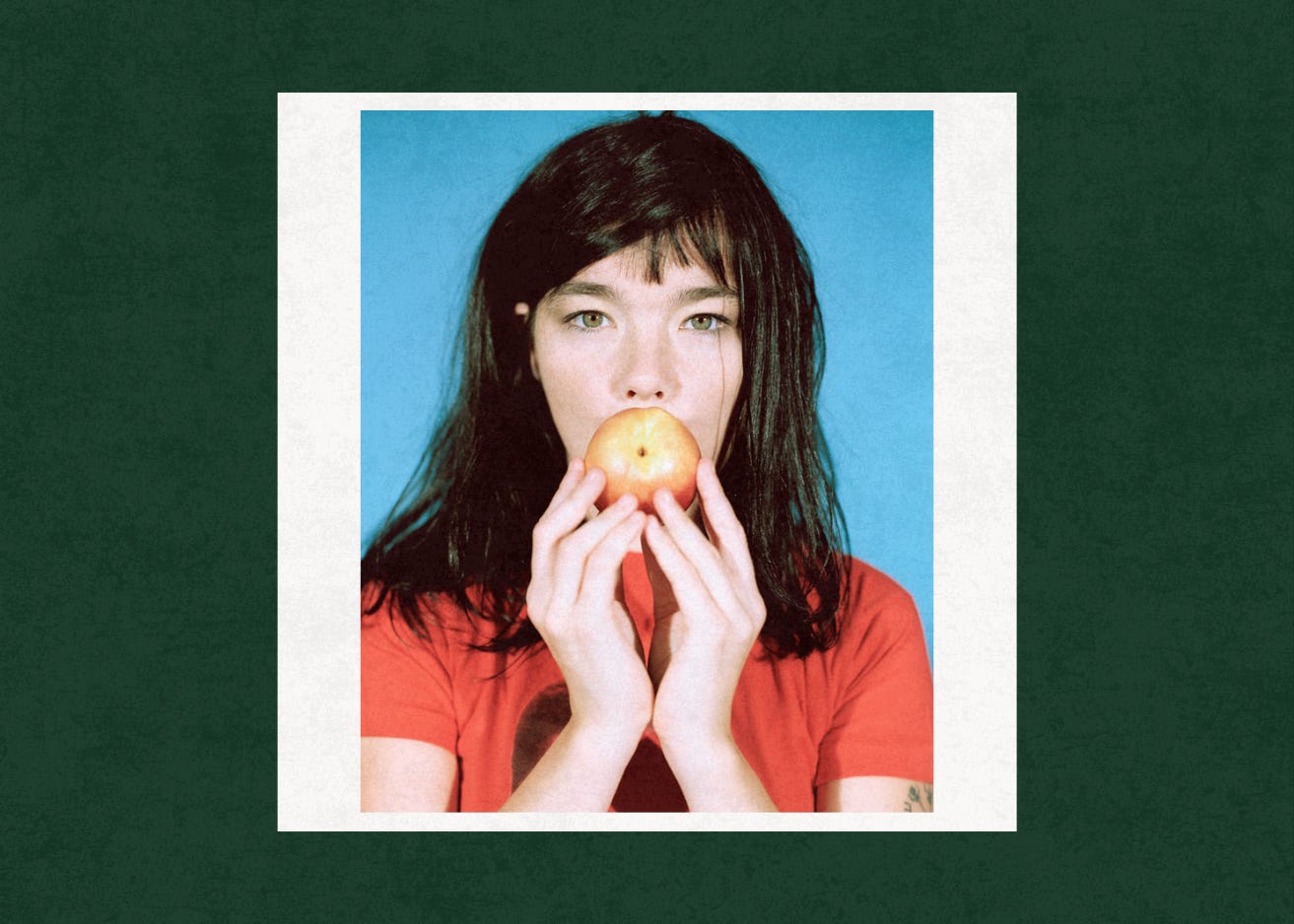
Age 29, “The World According to Björk,” by Sandy Masuo, Option, September 1995
Music has existed ever since some of the monkeys decided to become men, you know, and even before that — has been about taking the noises of your surroundings and making music out of it. I mean, you could take some African tribe, and whatever music that they made was from the nature around them. And someone like Bach would structure music like the German sort of hierarchy of thought that was going on at the time.
If you walk down a main street today in the average city — which is where most Westernized people live — you hear these quiet car noises, you hear car alarms, you hear mobile telephones. You hear people, you hear kids screaming. You hear the wind, you probably hear some animals, probably pigeons. And machine noises are everywhere. When you put your video in your VCR — that noise when it swallows the tape — and when your microwave oven is finished and you hear all those beeps and peeps. You should be making music out of these noises.
It’s brave and real to make techno music. I don’t think it’s pessimistic. I don’t think it’s escapist. I don’t think it’s unreal. I think it’s completely realistic. I’m not talking about being a pretentious arty git, or being like, really deep. I’m talking about being brave enough to make music that’s about today.
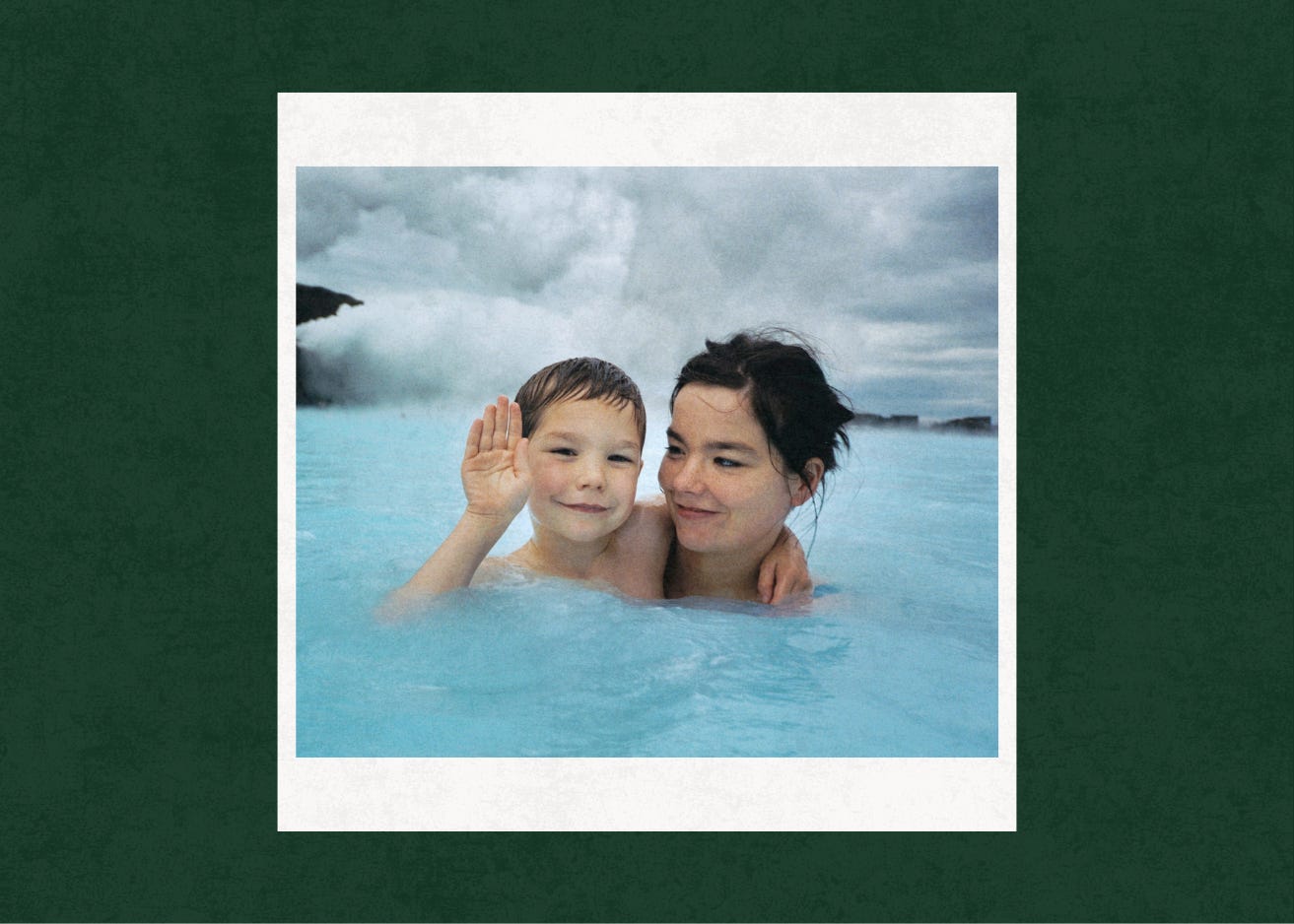
Age 30, “Passing Notes with Bjork: A Study of Human Behavior,” by Nathalie-Roze Fischer, iD Magazine, September 1996
Interviewer: List your priorities in order of importance.
Björk: IMPOSSIBLE! It changes everyday and I’m terrified of having a recipe for life. It scares the shit out of me. I wonder about the future, but I never plan on it. The only project I really have to do that for is my best one: Sindri, my son. With kids, you can’t always be spontaneous, but I think that mostly my adventures are good for him too.
Interviewer: Did you plan on having a child so young?
Björk: No, but I’m glad that I did it then, because life was less complicated at that point. I’m pro-choice, but for me it felt right, even though it was a surprise. Unlike what tons of people say, being a single-mother is great. I owe him for all the joy he gives me. He has a lot of love in his life and that multiplies in mine too. We’re like friends too, not just connected by the blood. I love his spirit.
Age 30, “Freaky Mömma,” Jennifer Tility, Bust, September 1996
Interviewer: What do you see as your mission as an artist?
Björk: I guess to smitten people. Meaning a lot of things, it depends on what day it is and what situation I’m in. I sing about emotion and sometimes, it’s sympathetic, sometimes it’s to remind people of being alive. I’m not saying necessarily that I succeed all of the time but that’s my target, you see, that’s why I’m still doing this job after all of these years.
Interviewer: How do you know when you’re laying down a track then, whether you’ve done that?
Björk: You can just feel it. I think people should not confuse it with something like “godly” or “otherworldly” or “supernatural” or “Ghostbusters” or “diva” or “power” — especially not power. It’s the opposite. It’s a very humble energy. It’s kind of hard to describe without sounding really fake. It’s just like when you meet someone the first time and you just know you’re going to be great friends. It’s like, how did you know that you fell in love or not? You just know.
Interviewer: Do you feel that music, or other kinds of art, has an obligation to innovate?
Björk: What I don’t like about the word “art” is the fact that certain people are artists and certain people are not. The minute you think that this energy — like what you say, “innovative” — belongs to certain people and not to others, you’ve got it all wrong. Then you’ve got some sort of VIP or hierarchy of that energy. That energy belongs to everyone. You can be creative just by driving a taxi but you have a great sense of humor — I consider that very creative. I admire different people that can be in that kind of situation and still just come up with something that never existed before. At the end of the day, that’s what creativity is about, coming up with something that never existed before.
Interviewer: Do you feel like there have been innovations in pop music in the past 20 years? Has there been a lot going on?
Björk: I’m just trying to draw the attention away from the pop music thing and show that it’s the same struggles that everyone is dealing with. So at the end of the day, you’re born with ten fingers, two eyes, and a mouth and an imagination and you get like 50 or 60 years out of life. It’s your duty to use what you’ve got and not just put yourself to sleep or function like a robot. It doesn’t matter what job you do, to wake up in the morning and actually find that day exciting is the biggest victory you can do. And then, say, to do a song like that, which is my job, sing them and go [intake hiss of breath] just before I go onstage, I’m like, “Woohoo!” It’s just an appetite for life and enthusiasm; life wins death — 1-0. And I’m always trying not to be philosophical or deep but, for me, it’s everywhere. It’s not just in pop music.
Age 35, “Björk in Paradise,” by James Servin, Nylon, June 2001
I never have a marketing plan like a lot of pop musicians do. I let the work just take as long as it needs to, because the creative process is like a plant. That’s the best thing about creativity. You can’t say, OK, by Tuesday, I want this twig to have grown three centimeters northwest. It won’t do that; it will just go whenever it wants to. The only thing you can do is make it feel good, and make sure you give it the nourishment it wants. I’m very protective of the creative process.
For most people, the eyes are a lot more developed than the ears. For most people, music is a pretty abstract thing. If you look at my songs as a cave, the words and the photographs are the guide who goes out of the cave and says, ‘Listen, look in here.’ Sort of a David Attenborough thing: If you look right here, there’s a bit of joy here, and if you look on the left, there’s a bit of humor. Go a little deeper in the caves, and there’s some pain. The words and the images are most like signposts, a tool to describe the dogs, because I want to communicate.
Age 38, “Voices Carry,” by Lorraine Ali, Newsweek, September 6, 2004
I think about all the albums I found in secondhand stores that weren’t even big when they came out, but totally saved my life. Those artists jumped off the edge.
I went solo at 27 because I felt I was just having too easy of a life. I was relaxing, going to band rehearsal, playing with my little baby.
I thought, wait a minute, you can’t pick all those fruits and enjoy them and not make any efforts yourself. I had to give it a go instead of being a consumer who made everyone else take the big risks.
Age 41, “I have a lot of respect for people like Debussy,” by Paul Lester, The Scotsman, August 2007
I don’t think I’ve been as extreme as people think I am. I just think change is more natural than staying the same. It’s like film directors: just because they make one movie that happens in space, it doesn’t mean that their next ten happen in space. Their next one could be a family movie or one set in the 1800s.
But a lot of music these days is stagnant. In the last 50 years pop music has become a very profitable thing and the market has made it stagnant.
I have a lot of respect for people like Ravel and Debussy; people who bridged the gap between more serious music and more public music, and were very true to themselves and didn’t water themselves down to please anyone.
I like to spend half the album like Sherlock Holmes, doing detective work, trying to find out, OK, there’s this unknown world inside me and I know what it is, and it’s like, how do I make that into sounds?
There’s a lot of time making mistakes and throwing things into the bin, until I find that place.
But maybe I enjoy so much the Sherlock Holmes aspect that by the time I’ve found it I want to find the next thing.
Age 42, “Made to Mingle with Electricity,” by Matthew Westwood, The Australian, January 2008
Every time I start an album, I’m in a place I’ve never been. I’m blindfolded and a bit lost. And I quite like that feeling.
Usually, because I’m a singer, I use my voice as a tool. I will usually walk a lot outside, and sing a lot, and ideas will come to me. The second thing is the emotional state where I’m at. Then I will maybe go out and arrange things, and find collaborators, depending on the emotional state I’m in.
The melodies almost always come first. And sometimes it’s a long process. I will let it lie there, and if it comes back to me, it’s important. I have a faith in the simplicity of the melody: it stands for something quite ancient and almost shamanic.
All the best melodies in the world, no matter what music it is, they have some magical construction inside them. Each constellation of notes stands for different emotional states.
Age 44, “The Essential Art of Being Björk,” by Mathias Augustyniak and Michaël Amzalag, Interview Magazine, 2009
You have 1,000 colors of emotion, and each album is one color exaggerated. It’s so exaggerated that it’s not me, but it’s one color, you know? And I feel like that color is in everyone.
I also think it’s fun to play games. People ask me questions like, “Oh, you look so theatrical in your photographs. Is that what you’re like when you walk down the street?”
It’s like, “Of course not.”
It’s such a silly question — it’s like being theatrical is a crime. I don’t think it’s a crime. I think humans have always needed this. In rituals for thousands and thousands of years, they’ve put on shaman costumes and have had out-of-body experiences. I think there’s a need for the theatrical. It’s very organic and ancient and human. I don’t think it’s artificial.
It’s a little bit like tarot cards. Each card is very exaggerated in what it stands for, but no person is just one tarot card.
Age 46, “Björk: what inspires me,” by Rebecca Nicholson, The Guardian, May 2012
There’s something about the rhythm of walking, how, after about an hour and a half, the mind and body can’t help getting in sync.
I have written most of my melodies walking and I feel it is definitely one of the most helpful ways of sewing all of the different things in your life together and seeing the whole picture.
Age 47, “theartsdesk Q&A: Björk,” by Russ Coffey, The Arts Desk, November 2012
Interviewer: What do you think are the qualities that make for a good artist?
Björk: I don’t necessarily think that artists are the only artists. My grandad used to make fireplaces and he had a pretty great way of doing that. He’d show us Polaroids from his wallet of the latest one that he’d made. And there are mothers who bring up their children quite creatively, and so on. There are also a lot of artists who aren’t really creative, as well as non-artists who are very creative. So I don’t necessarily think the lines are drawn like that, you know.
There’s got to be something said for having idiosyncrasy and your own identity and sticking by it. It’s easy to stick by it when things are going well but when things aren’t going well it’s much harder. I would say that’s what makes a good artist. That they stick by it.
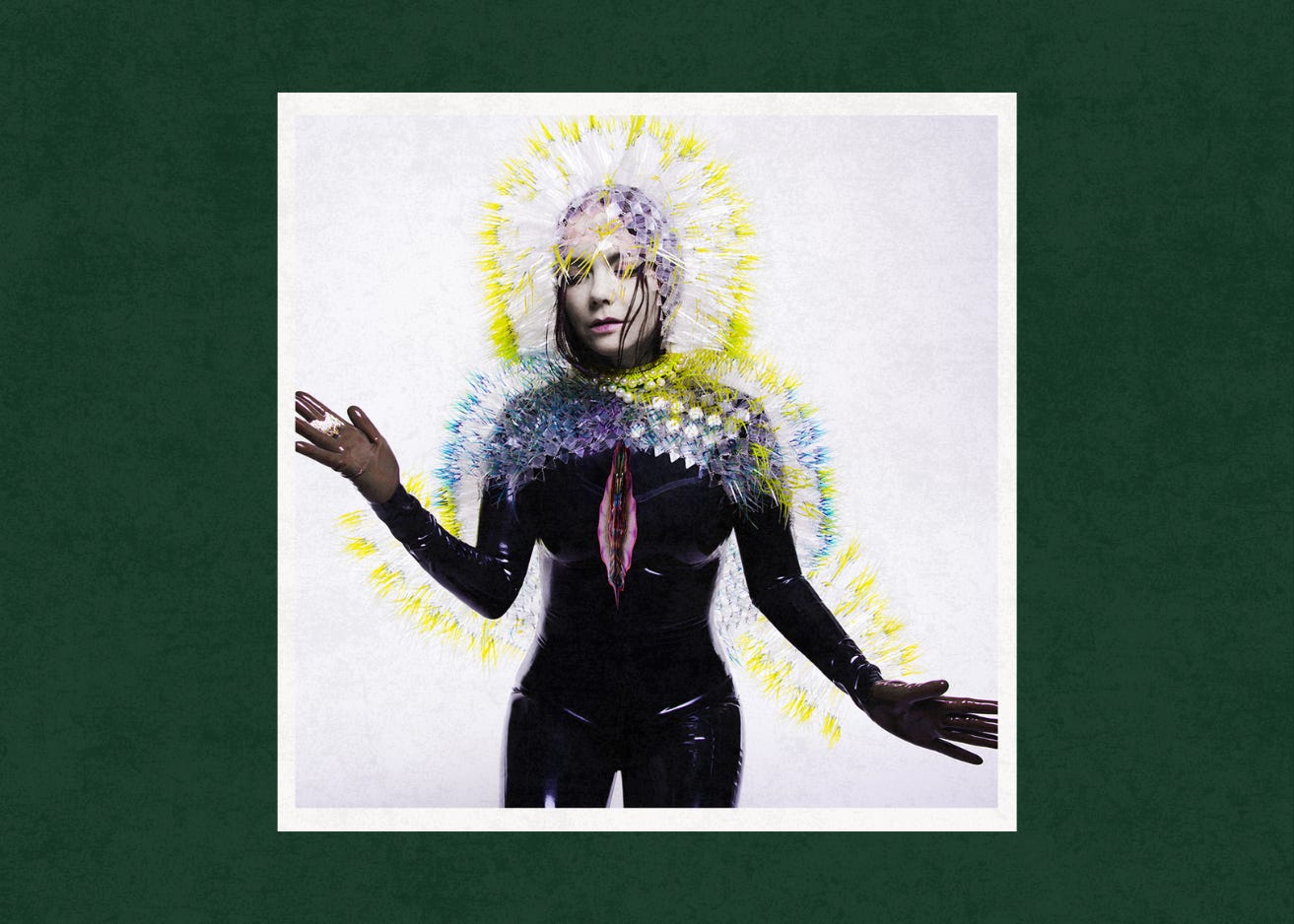
Age 49, “The Invisible Woman: A Conversation With Björk,” by Jessica Hopper, Pitchfork, January 2015
Interviewer: In the first two songs on [Vulnicura], you’re singing about wanting to find clarity. Does writing a song about something that has happened bring you clarity on the other end?
Björk: Yeah, I think so. When it works. I go for a lot of walks and I sing. That’s when you find an angle on things, where it makes sense for that particular moment. It’s more that feeling. In a way, I also rediscovered music, because [chokes up] — I’m sorry — it’s so miraculous what it can do to you; when you are in a really fucked situation, it’s the only thing that can save you. Nothing else will. And it does, it really does. I’m hoping the album will document the journey through. It is liberation in the end. It comes out as a healing process, because that’s how I experienced it myself.
Interviewer: It very much does. Towards the end of the record, there is a Buddhist sentiment about the obstacle being the path. You sing, “Don’t remove my pain, it’s my chance to heal.” That’s how we figure things out, isn’t it? That the only way out is through, that having things be easier is not helpful in the long run.
Björk: When I say that, it might come across that I’m incredibly wise. But it’s the other way around. I’m fucked and I’m trying to talk myself into it, like, “Go, girl! You can do it!” It’s me advising myself. It’s not me knowing it all — not at all. It’s just a certain route you just have to go; I went through it.
It’s really hard for me to talk about it. It really is in the lyrics. I’ve never really done lyrics like this, because they’re so teenage, so simple. I wrote them really quickly. But I also spent a long time on them to get them just right. It’s so hard to talk about the subject matter; it’s impossible — I’m sorry. [tears up] There’s so many songs about [heartbreak] that exist this in the world, because music is somehow the perfect medium to express something like this. When I did the interviews about Biophilia, I could talk for four hours about tech and education and science and instruments and pendulums — all the things we did. This one, I couldn’t put any of that stuff on top of it, because it has to be what it is. And I can’t talk about it. It’s not that I don’t want to, I’m not trying to be difficult. It really is all in there.
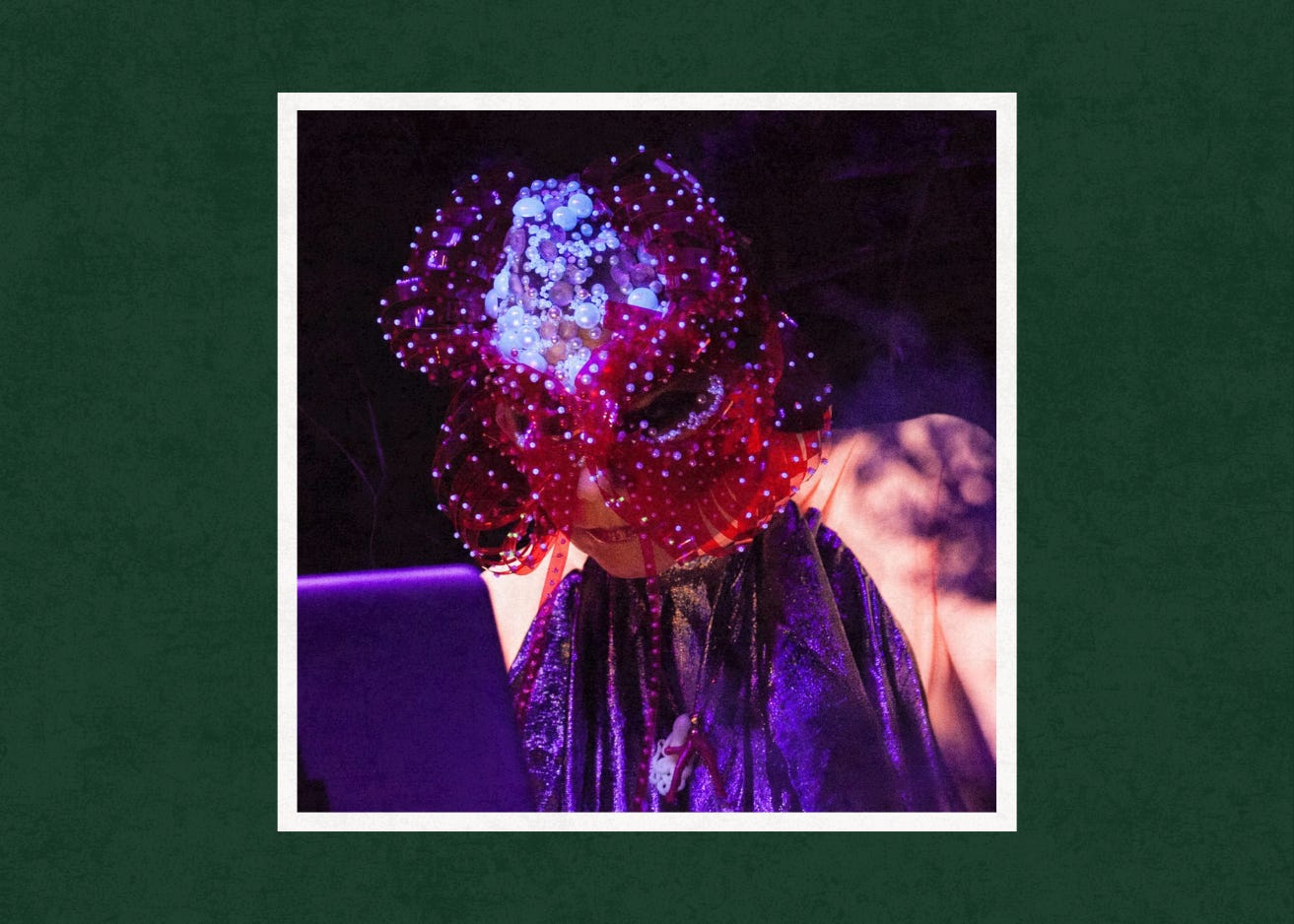
Age 50, “Bjork : ’I’m not into normcore sexuality,’” by Stephanie Rafanelli, The Standard, October 2016
I felt very blessed with being invited to all the A-list parties so that I could try it for a year and know that there is nothing to miss. It’s not what it looks like. They’re really boring. Everyone is standing there frozen and you can’t move, you can’t get pissed. Most importantly, the music is terrible at those parties. Horrible. And then soon there were 40 paparazzi hiding in my bushes. I thought: “I can’t write songs like this.”
I made a conscious decision that I wasn’t going to be dependent on being liked.
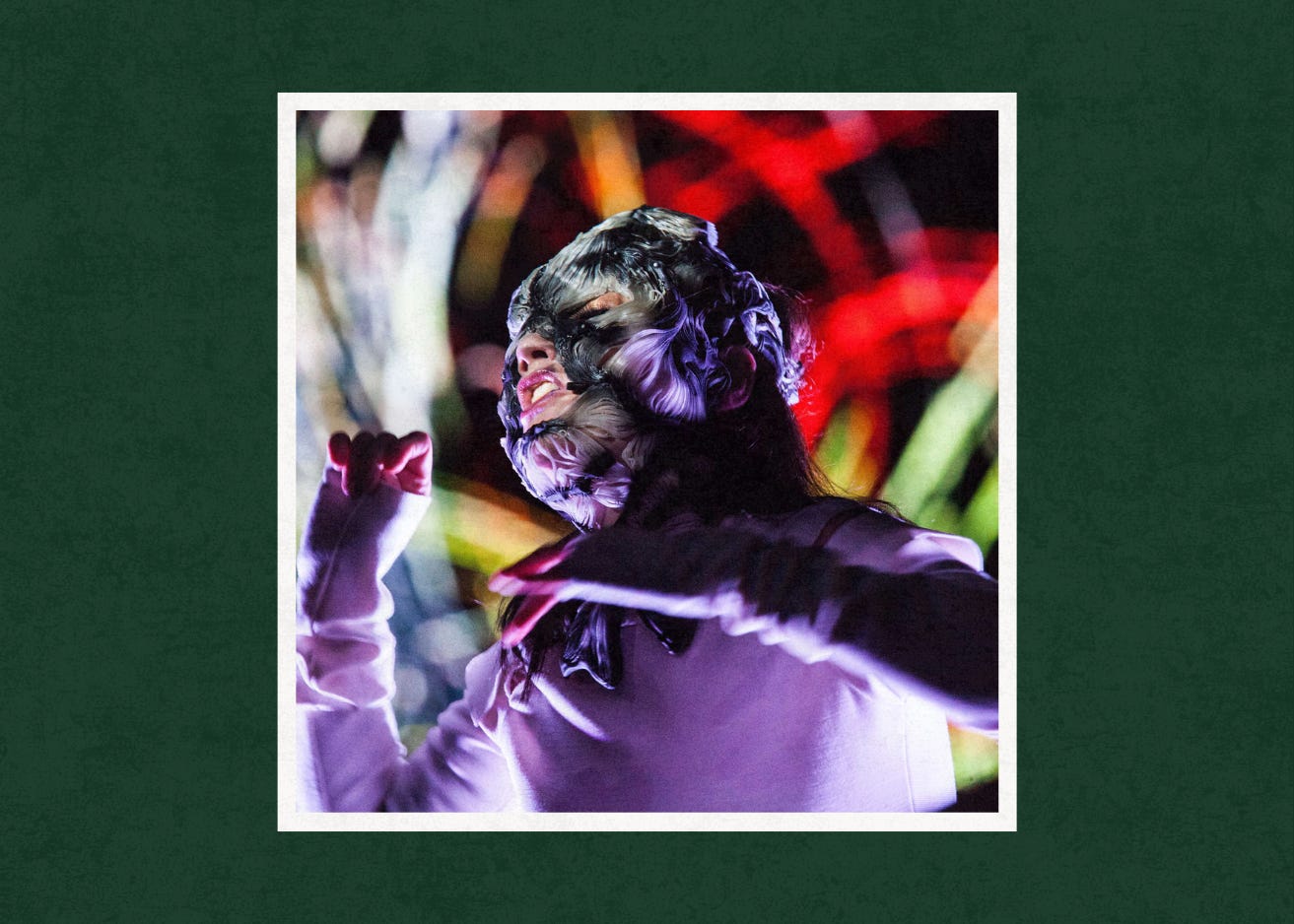
Age 51, “Exclusive interview with Björk: ‘The pain was a journey,’” Iceland Magazine, December 2016
As I get older this feeling of responsibility, which actually grows from the philosophy of punk, only gets stronger. I understand better that you are responsible to bring out in society those things you want to be part of. If you can‘t do that, nobody can. In ancient times, this meant that you couldn’t rely Skífan or Steinar [the big record companies in Iceland in the 80’s]. If you weren’t happy with the music which was being released, then you just made your own music.
The lesson is that you can’t point at others and blame others. You can only create something new, and that is my attitude to the projects I am working on today.
I’d rather try to be engaged. Be a participant. Try new things and ask questions: What if? What if we go this way?
Technology is part of the artistic process, crafts, our expression. The word techno comes from Greek and actually means crafts. We created a spear, carved, stitched, constructed, painted. And before we know it, we have an iPhone in our hand. I don’t know why we are trying to separate technology from other things we create. It is like trying to cut off your arm. Saying we are good and that we live here, and that technology is evil and cold, and over there ; that isn’t realistic. I want to build a bridge between the two. Technology is part of us.
Yes, I speak only for myself, but to be honest, I feel I need to use the technology that we are developing today. We watch videos, Netflix, we use our telephones and we stay in touch with our loved ones. I don’t want to overlook this technological world, which is just our everyday experience. I want to create with it. We are all emotional beings and we need to find a path for this in our everyday lives. With whatever tools we have. At least I think it’s extremely important for us to record at least a part of what is important to us with these tools.
To compose a song has many aspects. I think I compose at least one song each full moon. That is perhaps the greatest flight. Sometimes I am surprised when I listen to them later. But there are many sides to making music, and I respect each side just as much. For example when I am writing string arrangements or cutting together rhythm. It is perhaps more like making embroidery or knitting. Calmer, but just as magical and calm, and if it succeeds, just as much of a gift. A different speed, more like praying. Then you mix and master the sounds. These are all different aspects, differently streamlined approaches to the same thing: to prepare a gift you want to give. To choose with great care which of your inner conversations you are willing to share, which you feel will make some sense and connect or find harmony out there.
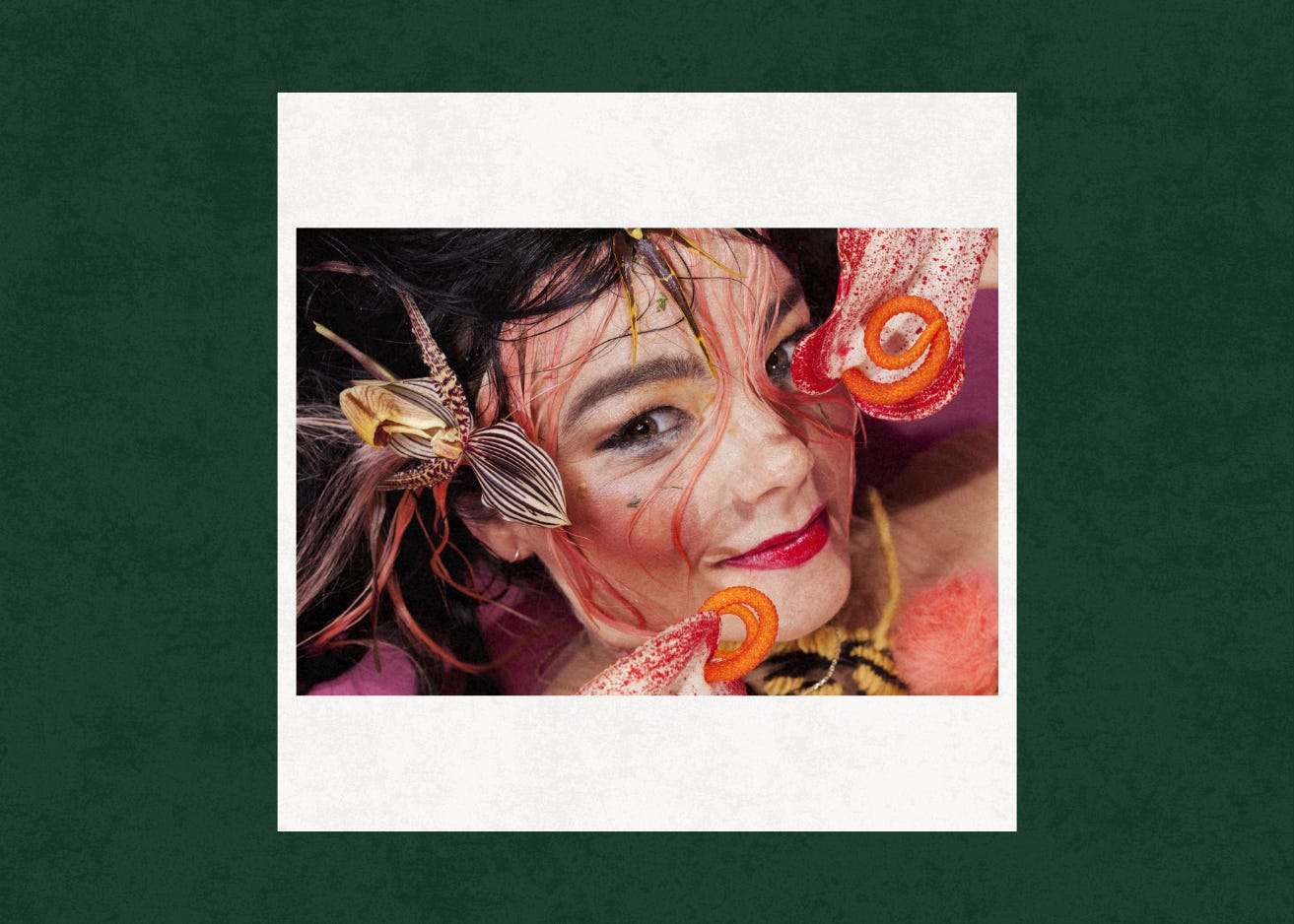
Age 51, “Björk Is Magic,” by Kim Taylor Bennett, Noisey, May 2017
The best feeling is if you’ve written a song you think is good. We are hard judges, we write a lot of songs we think are OK, but when you write a song you think is good — that feeling is special. You do the whole thing for that feeling and you couldn’t put it any better for me : to have nothing and then there’s something. It’s like magic. It’s a philosophical statement, it’s proactive : you don’t like this world, how about this ? It’s you coming up with an option or positive rather than the other option which is going down the drain. There’s no neutral, you have to make things to go forward — I mean that in the purest philosophical way.
[But] I love a lot of aspects, I love getting lost in making some new programs, or some software, or sitting with a bunch of nerds and drinking a lot of tea or coffee. I’m a homebody ; I mostly work in my house [in Iceland]. I have a little studio room here [in New York]. You don’t need a lot of space to make music. Occasionally you do if you’re recording strings then you go for a day in a fancy studio, but then you go back into your room, it’s less pressure. I don’t like writing in fancy studios because that hour you didn’t do anything cost a billion dollars. I also like having nice candles and I like having my little things there, making a cup of tea and telling jokes and cooking and having a few drinks.
I don’t like a nine-to-five mentality. Definitely my least favorite thing is the money side. I am very blessed because I have someone I work with since I was 16. I know a lot of my friends don’t have that and I don’t take it for granted and also it’s unconditional, we’re in it for life so it’s unconditional. Sometimes he’s my manager and sometimes he’s my record company, but he’s probably both. That’s really special.
Age 52, “Björk Invites You To Her ‘Utopia,’“ by Rachel Martin, NPR, November 2017
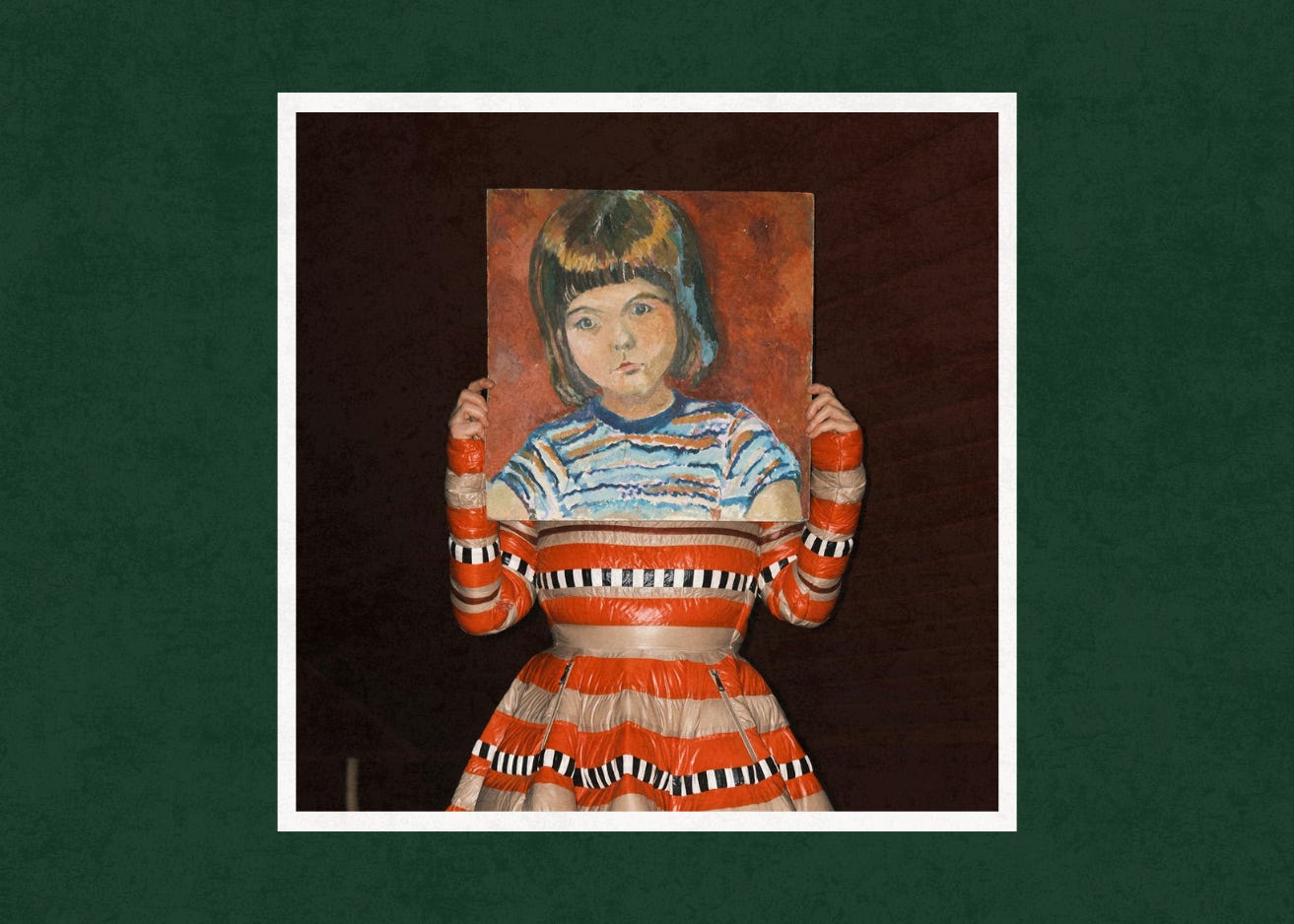
Björk: I started writing melodies really young. I would always walk a lot outside. I lived on the suburbs of Reykjavik. And that generation, we would walk in any weather. And I would sing a lot. And that would be my friend — how I would sort of cope with all the different weathers and the darkness.
I think when you walk and sing at the same time you’re probably regulating your breath — it’s like a certain rhythm. And I still that’s my most preferred way of singing still is walking — not fast or anything, just slowly — and actually very horizontally. I’m not much of a vertical hiker.
Interviewer: (Laughter) What is your go-to song when you’re just walking around the city?
Björk: Most of the time when I’m singing, I just make things up. I don’t really sing other people’s songs — not even my old ones. I usually always try to walk somewhere where nobody can hear me. I’m not really comfortable with people hearing. It was for so long a secret of mine so I think I’m probably quite good at hiding it.
Interviewer: I have to say there’s something funny about the idea of Björk walking around singing to herself and then being so embarrassed that you then stop when someone walks up (laughter). I mean, you are Björk. You’re pretty good at singing.
Björk: But I’m not Björk to myself. I’m just — nobody is an icon to themselves.
Age 52, “Electronic music superpower: Björk is constantly innovating,” by Ralph Moore, Mixmag, November 2017
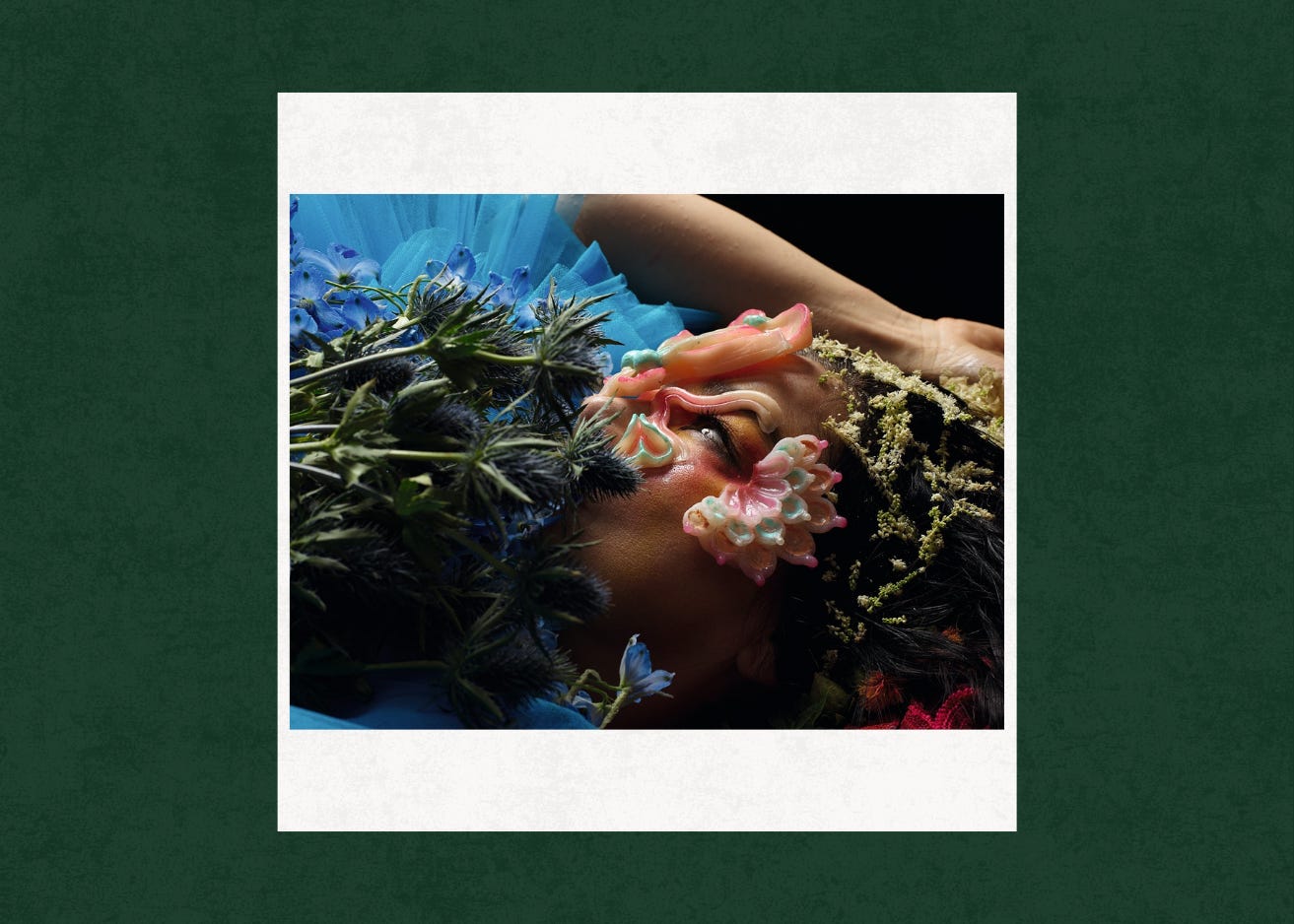
It’s actually functional to be optimistic: half of your life is going to be dark and half of it will be light.
Unfortunately, if you only focus on the dark part it can feel to you like one hundred per hundred darkness.
But if you focus on the light, too, it’s not because you think life’s going to be all Pollyanna-ish and no darkness exists. There are dark moments on this album. But if you focus on the light, the darkness will take care of itself.
This post is part of a growing collection:
My Favorite Things Great Artists Said About The Creative Life

The creative life is hard. So I’m finding what great artists had to say about it.